

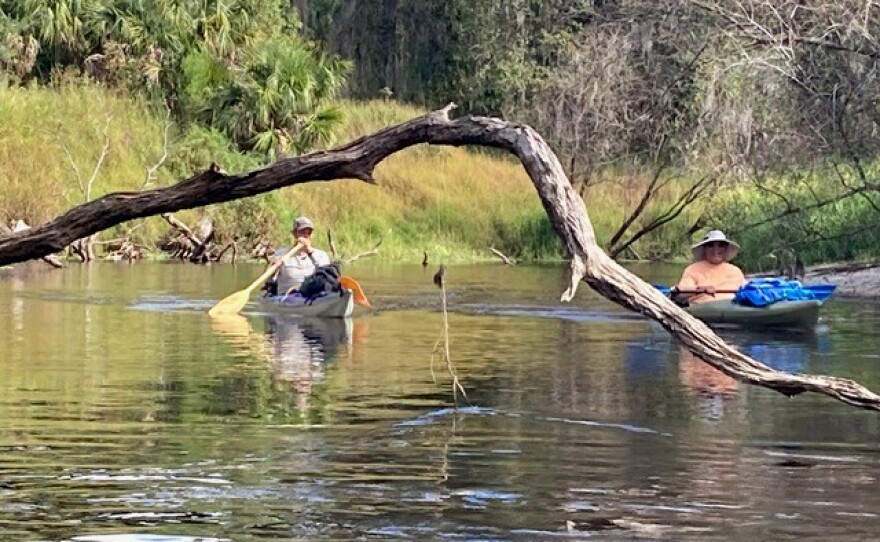

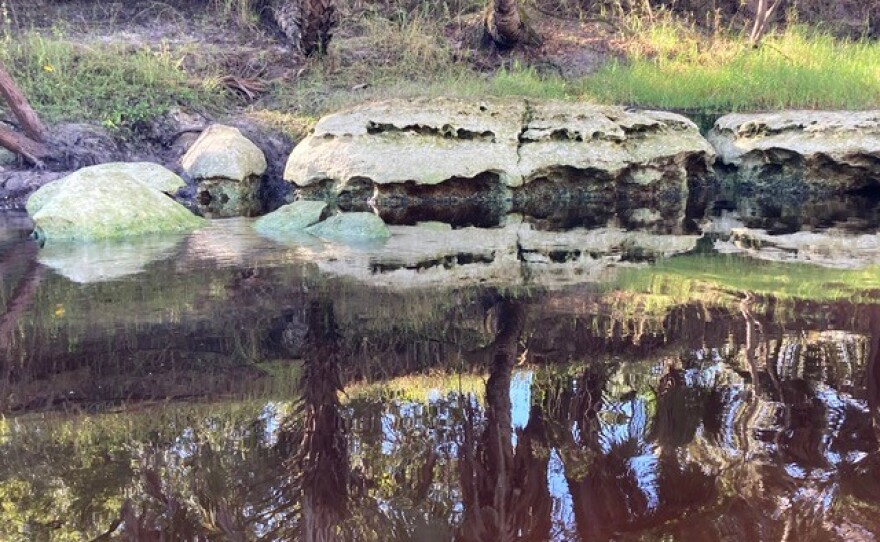



We recently took a kayaking trip down the Central Florida river, and noted how it has changed — but remains an ever-flowing slice of Old Florida.
On our second morning, we found ourselves about 15 miles south of Zolfo Springs. That's where we put in the day before, en route to our destination: Arcadia.
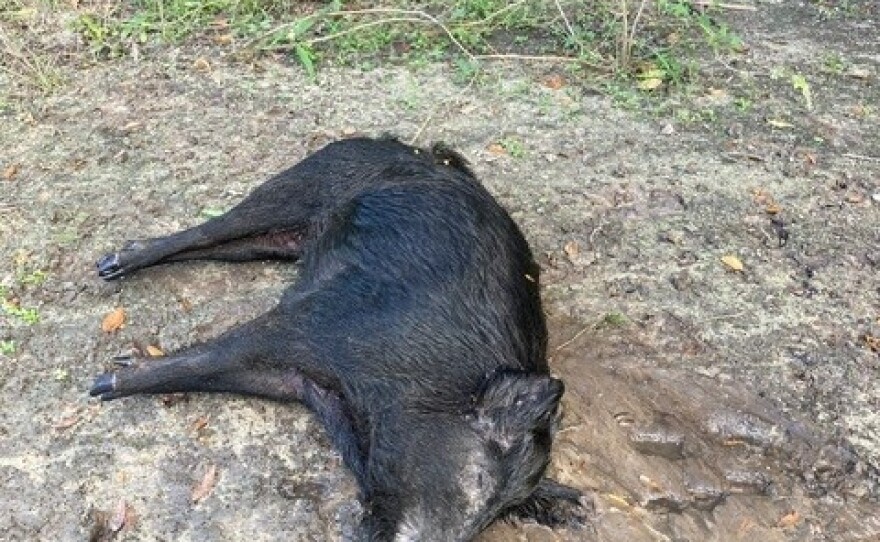
Five of us paddled about 40 miles of the Peace, just ahead of the first cold front of the year. It was three days and nights of quiet bliss, one dead boar and a long window into Florida's past.
On a warm morning, we were woken up by the sound of a whippoorwill outside our tent. We saw several kingfishers, great white egrets and even a roseate spoonbill. Their pinkish wings glistening in the sun is something to see.

The Peace winds 106 miles from the Green Swamp in Polk County to Charlotte Harbor on the Gulf.
This river lives up to its name. It was first called the "Rio de la Paz" — River of Peace — by Spanish explorers in the 16th century. The Creek (and later, Seminole) Indians call it Talak-chopco-hatchee, the River of Long Peas.
"It's possible that Fort Meade was the site of the town visited by Hernando de Soto in 1539 called Musco," said historian Canter Brown Jr., who grew up in Fort Meade, a few miles north of where we put in, "And both the chroniclers of the DeSoto expedition write about it extensively, including the magnificent wooden temple that was there."
Parts of it haven't changed much since then. It's still a flowing slice of Old Florida.
But areas around it don't bear any resemblance to what the conquistadors saw. It became the center of the state's phosphate industry and now quenches the thirst of nearly 1 million people in four counties.
"The miracle is that it still retains so much of its historic nature in so many places," Brown said. He found the river of his youth so fascinating that he wrote a book, Florida's Peace River Frontier.
"We have what passes for recorded history for 5,000 years. It believed going back to 3000 BC. It was a center for chert mining, which was Florida's substitute for flint," Brown said. "It just has historically been a semitropical paradise, in its way."

The industrial revolution eventually came to this part of paradise in a big way.
In the 1880s, pebbles of phosphate rock were discovered here. That set off a frenzy of mining — because it's the key ingredient in the production of fertilizer.
There are now 27 phosphate mines in Florida, covering nearly half a billion acres. And most of them are in this area, known as Bone Valley. It's the nation's largest deposit of phosphate. And with it comes the dangers of mining.
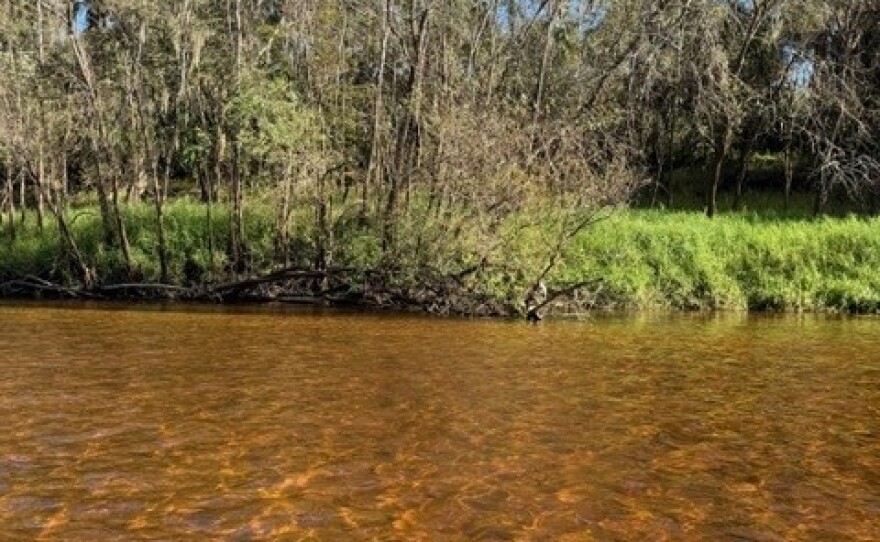
The water during the trip was a beautiful caramel brown, glowing in the sunlight. But the color of this water wasn't always so clear. In 1971, a dike gave way at a holding pond for a phosphate mine way upstream and killed an estimated 1 to 2 million fish. It was said the color of the water was the color of chocolate milk.
Brown said the phosphate spills transformed the river.
"The earliest pioneers all talked about the clear water, the springs that lined the river up and down, the beautiful tropical birds that were everywhere, that fish that were so easily caught," he said. "And of course, those phosphate spills pretty much did away with all that.

Another mine has been proposed for DeSoto County, near Arcadia. It would straddle Horse Creek, a tributary of the Peace that is considered one of the purest waterways in Florida. Opponents say it could threaten the quality of drinking water that is siphoned downstream.
Phosphate was not the only thing early settlers found here. It’s called Bone Valley because prehistoric fossils and huge fossilized shark teeth are found in the river.
"When I was a boy, it was nothing to go down, walk along the river and find arrowheads," Brown said. "Right next to them would be shark's teeth. So it's really a living laboratory of this very complicated past we've had, but that we only have rare glimpses of."
"You can go all the way from the banks that historically have lined the river south of Fort Meade, where they used to dig mastodons out of whole skeletons," he said. "There of historical accounts of that."
The Peace runs along the western side of the Lake Wales Ridge, which, millions of years ago, was the only part of Florida above water. That's why sharks' teeth and even giant megalodon teeth from millions of years ago are still being found there.
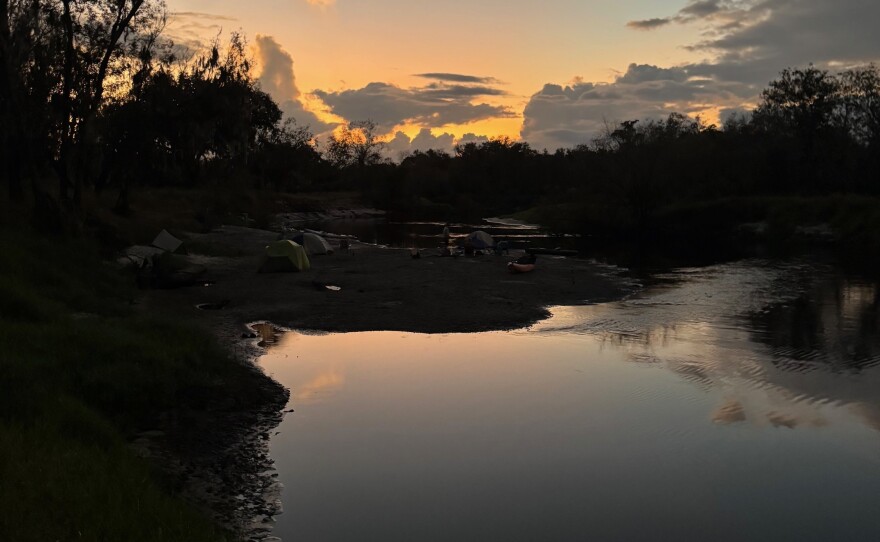
When we camped on a sandbar near Arcadia, my friend Noel Childress found half of a shark's tooth in 15 minutes of digging in the sediment.

Brown told a story of a group of men who set out to explore the remote river back in 1860. They were scouting it in anticipation of it being developed, with the Army Corps of Engineers planning to dredge its sandy bottom into a navigable channel.
But he said the river changed their minds. And that dredging didn't happen.
"It transformed them," Brown said. "They went from talking about the technical possibilities of exploitation to just being awed by the beauty of it. And I think the river itself helped to divert their attention."
Just as we were awed by the beauty of a river that has flowed through the pages of Florida history — with its next chapter yet to be written.


