-
 “As soon as you get past sandbags the rules get real shades of gray.”
 -
 In Whitted, testing has confirmed the water is contaminated with arsenic and PFAS/PFOS. An effort to connect the residents to the local water system has moved slowly.
 -
 Even with this latest activity in the Gulf, it's been a quiet Atlantic hurricane season so far, which is typical for the El Niño climate pattern we're in right now.
 -
 The Florida Department of Education held its first listening session at Armwood High School. Some teachers brought up their concerns about missing topics, such as evolution.
 -
 The search for favorable astrophotography conditions has only gotten harder due to changing atmospheric conditions, ash and dust from wildfires and light pollution.
 -
 Gulf waters have been one to three degrees warmer than average across much of the basin, which is “just a hair, about a tenth of a degree or so above the prior records," according to a climate scientist.
 -
 Tampa’s University Area lost millions of dollars when the Trump administration cancelled the Environmental and Climate Justice Block Grant program. Eighteen months later, organizers are still determining the best path forward.
 -
 The threat of hurricanes and costs of insurance are pushing residents into former citrus lands and inland communities.
 -
 Gov. Ron DeSantis signed a law two years ago removing references to “climate change” from statutes. Now, a WUSF investigation shows how textbook authors were asked to do the same.
 -
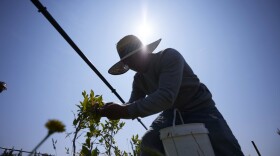 Research shows heat amplifies the dangers of pesticides for farmworkers, and that the problem is poised to grow as the global climate warms.
 -
 Resilient Florida was created to provide funding to help communities prepare for the impacts of more frequent and severe flooding, but not all who are at risk get the help they need.
 -
 Greenville and Mount Dora show how some communities applaud Resilient Florida for its flood help and others don't know they're eligible.

© 2026 All Rights reserved WUSF
Play Live Radio
Next Up:
0:00
0:00
Available On Air Stations


