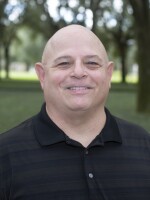
For Mudia Reuben, success isn't measured by what he accomplishes, but by what it allows others to accomplish.
Reuben, a wide receiver at the University of South Florida pursuing a master's degree after graduating from Stanford in just three years, grew up in Kansas City listening to his Nigerian-born parents describe villages where families walked miles each day for clean water.
Today, many of those same communities still struggle with access to clean water. So, the opportunities created through college athletics have allowed Reuben to do something about it.
“I launched it with the NIL collective there at Stanford,” he said, referring to the independent booster-funded groups at universities to pay student-athletes for use of their name, image and likeness in sponsorships.
Reuben used those earnings from his final year in California to create a nonprofit foundation that's building boreholes — deep wells that tap underground water — in communities in the country where many of his relatives still live.
"A day for them is they wake up and may walk to the farm to collect crops, or they may walk several miles to a river,” Reuben said on “Florida Matters Live & Local." “Then they're carrying heavy bins of water back, and after that comes school."
Because education is such an important part of their culture, Reuben says the project is about more than delivering water. The goal is “just to alleviate the strain and time on these residents — mostly kids,” he said.
When children aren’t walking for hours for something as basic as water, they have more time for productivity in the classroom and extracurricular activities, he said.

"I was hearing these stories and thinking, 'What if they could invest this time into anything else?' " Reuben said. "If we can bring the water to within a five-minute walk, that'll open up so much."
So what’s a college athlete’s first step in a life-changing project for people 7,000 miles and an ocean away?
“An idea is only an idea until you put something into it and put structure into it,” Reuben said. “I was able to invest my money, and that was like what lifted it off the ground. From there it was donations, other installments of cash from NIL and things like that.”
Ultimately, he said, it was “having the availability to do it right in front of me.”
He eventually raised $20,000 to begin the Nigeria Water Project, which has completed boreholes and water storage centers in five villages near Benin City, the capital of Edo State. They are Uvbe, Urhokuosa, Ebue-Neki, Iguovbiobo, and the 300-student Fortress Preparatory Academy. A sixth is in progress in Ohovbe.
“I needed a little jump, just a little way that I could kickstart it off, and then when donations start flowing, it's a smooth process,” Reuben said.

On-site assistance needed
One of the early tasks was finding contractors in Nigeria who could find water under the ground, sometimes 100 feet down. Reuben hasn’t been to the region since he was younger, so he needed on-site assistance.
“Having family members that still live in these villages … that was a huge help in being able to reach out to people and being able to have a trusted tight connection or a network out there, but then from there it's finding the contractors,” he said.
“You can dig, dig, dig, and then finally tap, and then there's no water, and that's a lot of money spent, so our contractors go out and find places that have the potential, that have vegetation, that have forest wildlife and places that have just the potential to have water and water reservoirs deep below.”
From there, generator-powered pumps draw water from the borehole and push it through galvanized steel pipes into 15,000-liter storage tanks, according to the project’s website. Before reaching the taps, water passes through sediment filters.
Returning to the overall goal, Reuben doesn’t see his foundation work stopping with wells.
“I want to maybe build a turf field, maybe donate and bring opportunities as far as sports to these villages,” he said.
“Just other avenues of ways that they can just have fun and spend time, other than just work, work, work, work, work, because you know, that's all they know. That's all my parents know, that's how we were raised and grew up on.”

Turning opportunity into action
Reuben is more doer than talker, with a unique ability to turn opportunity into action.
He picked up football during the COVID-19 pandemic, which interrupted an elite youth soccer career that had him on track to play at St. Louis University. After the switch, he emerged as one of Missouri's top wide receivers and chose Stanford over other Division I offers, drawn as much by academics as its football program.
An injured foot forced him to miss most of his final year with the Cardinal, but he didn’t waste time. While organizing the Nigerian project, he completed his bachelor's in science, technology and society with a concentration in life and health sciences. An unexpected coaching change told him it was time to open another door.
But the decision to leave Stanford wasn't simply about football, and neither was his choice to come to Tampa.
When Reuben entered the transfer portal in 2024, he had his eye on West Virginia and North Carolina, where six-time Super Bowl winner Bill Belichick was hired as head coach.
Then Dylan Douglas, a former youth soccer teammate working as an intern in USF’s recruiting department, reached out. USF, he learned, offered twice as many graduate programs as Stanford. Another familiar face, former Stanford teammate Connor McLaughlin — a Jesuit High graduate who had already transferred to USF — helped convince him Tampa was the right fit.
Reuben expects to soon earn his master's degree in pharmaceutical nanotechnology and biomedical engineering.

A leader on and off the field
Since his arrival, his leadership contributions have rivaled his pass receptions. For example, in May, he was selected to host discussion panels during a USF coaches tour event at the Morsani College of Medicine tower in downtown Tampa.
And in April, he joined USF Athletics CEO Rob Higgins at the Florida Board of Governors' Task Force on Intercollegiate Athletics. During his presentation, Reuben related that many people questioned his decision to choose USF over bigger football brands and possible better paydays.
“There were a lot of naysayers and whatnot, but I came to learn,” said Reuben, who was an American Conference All-Academic selection last season. “The fact that it's also not just a financial thing and a money-grab thing, where players are moving for money."
Reuben drew on his own experiences and research to push back against the perception that today's college athletes are driven solely by money.
“The three main points that we saw from this was that players weren’t leaving just because they wanted more money, but it was due to their personal growth. It was due to their brotherhood. It was due to the resilience around staying in the program and the resilience around going to other programs,” Reuben told the task force.

Recovering from ankle surgery
Believe it or not, there is time for Reuben to focus on football. He said his debut season with the Bulls was surprisingly his “most productive” as a collegian.
“You know, I didn’t think it would be here at South Florida,” he said.
Reuben ranked third on the Bulls with 495 receiving yards and fourth with 26 catches. He also caught five touchdown passes, four of those during the regular season’s final three games before he broke his ankle against Rice.
The injury kept him out of the Cure Bowl loss to Old Dominion.
“I had surgery at the beginning of this year, though, and since then recovery has been great,” he said.
Reuben said he has enjoyed working under new head coach Brian Hartline, a former NFL receiver and Ohio State receivers coach.
“Offseason has been great with that coaching staff, and I'm just excited to catch footballs and get into camp,” he said.

The Cure Bowl occurred after the surprise departure of coach Alex Golesh, who jumped to Auburn hours after the Rice game. Reuben wasn’t new to coaching changes, so that didn’t affect the decision to remain a Bull.
Playing in the NFL not out of the question. At 6-foot-2 and 210 pounds, Reuben has prototypical size for a pro receiver, although scouts will look to see if can remain healthy through a season.
If not, he hopes what catches on off the field — especially through his work in Nigeria — shows the bigger picture he is trying to build.
“I'm in a blessed opportunity,” he said, “and you know, as long as it keeps going, then it'll be good.”
This article was compiled from an interview conducted by Sky Lebron for "Florida Matters Live & Local." You can listen to the full interview with Mudia Reuben here or in the video below.