Martin Luther King Jr. will forever be remembered as a man whose words held immense power to change the world. He was the epitome of the phrase "The pen is mightier than the sword."
His fight for justice and championing racial equality made him a major leader in the Civil Rights Movement — breaking barriers through marches, nonviolent protests and famous phrases like: "Darkness cannot drive out darkness: Only light can do that. Hate cannot drive out hate: Only love can do that."
The Georgia-born activist was assassinated on April 4, 1968. Decades later, he is still honored for his contributions and has inspired generations of people in their own life journeys.
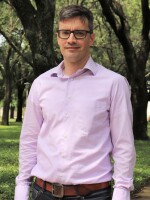
One of those is Rev. Charles McKenzie. He spends his time at Westcoast Black Theatre Troupe in Sarasota helping bring Dr. King's teachings to life through speech reenactments.
On "Florida Matters Live & Local," McKenzie explains how King inspires him and how he got into reenacting the legendary man.
The interview below was edited for clarity and brevity.
You bring Dr. King's words to life through reenactments. What exactly does that involve?
It has involved for me about — Oh, God, about 60 years of my life. About 60 years because I've been studying his life, reading his words and absolutely been mesmerized with him for most of my life.
So a lot of these words that I memorized are a part of my heart and soul.
Did you ever meet him or hear him speak in person?
Never met him. Never heard him speak in person. I've met people who did meet him.
How did this become part of your life? What was the initial inspiration?
I was 12 years old in Greenwood, South Carolina, with my grandmother on April 4, 1968. Walter Cronkite came on and announced that he [Martin Luther King Jr.] had been shot and then that he had subsequently died.
They played an excerpt of his mountaintop speech and that had a phenomenal impact on me. I had seen pictures and heard things about the movement, but hearing his words that night just had a tremendous impact on my young mind.
I was 12 years old and I said, "I have to learn more about this man. Who is this man with all of this power and charisma that is coming out of his voice?" I saw in his mannerisms just the kind of strength that drew me to him.
What would my experience be like if I were experiencing one of these speeches that you reenact?
I try to reproduce the words and the sound with the nuances of that particular speech event. And of course, he repeated a number of the things he said in different settings, but I might say something akin to when he said, "We're all tied together in a single garment of destiny, bound by an inescapable network of mutuality."
What is one of your favorite passages?
One of my favorites of Dr. King's is when he made statements regarding what he called the American dream.
Is it different than if you were acting in a play?
I think the difference is not so much in the oratory or the nuances or the voice patterns. I think the difference is that his speeches and his life impacted me to spend the larger portion of my adulthood involved in public service.
I've been an educator for almost 50 years now. I was a minister. I'm still an ordained minister and an activist, and I've been on a lot of different fronts, in a sense, fighting for the rights and fighting for opportunities and inclusion in our society for all kinds of people.
So what I bring to the stage is not only the power of his words and the spirit of the man, but a part of my own personal experience and involvement.
How do you get into character?
It's kind of a meditative thing, not that it's always the same way, but I think there's a shift that takes place, and I want to, at that moment, like I stated earlier, bring not just the words, but the spirit of the man.
"It's one of the things that I reflect on. And I love Dr. King so much. I love his legacy so much. And I think he's been such a rich part of the history of this country, that when I do these shows, and because I've been involved in a very direct way in the in these things myself, I say, 'Well, the man has had such a phenomenal impact on my life, I would love him even, even if I couldn't quote his speeches or try to bring them to life on stage.' "Dr. Charles McKenzie
And it's almost like an invitation for the spirit of the man to be a part of that presentation. I think I invite him in.
I think there's something within me that calls for him to be there at that moment. So the words have the same, or at least a similar impact.
The mission of the Westcoast Black Theatre Troupe is to produce professional theatre that promotes and celebrates African American history and experience. So what part do your performances play in that mission of the theatre troupe?
I think because Nathaniel Jacobs, of course, who's a genius, has taken what was once a one man play that I did with a soundtrack and a narrator, and giving it these live performances with the music and song and dance and all of that choreography and everything, it becomes a part of the artistic expression of the West Coast Black Theatre Troupe. And I think it's a great marriage.
I think it's a powerful marriage, and it helps to perpetuate what I think that theater is doing — presenting to the world the very powerful and the very positive impact of the artistic genius or creativity of African Americans and their role in not just the nation, but in the world.
How do you make sure you're treading that line between emulation and impersonation?

It's one of the things that I reflect on. And I love Dr. King so much. I love his legacy so much. And I think he's been such a rich part of the history of this country, that when I do these shows, and because I've been involved in a very direct way in the in these things myself, I say, "Well, the man has had such a phenomenal impact on my life, I would love him even, even if I couldn't quote his speeches or try to bring them to life on stage."
Is there anyone else that you also kind of try and bring to life with their speeches?
I've done some excerpts from some of Jesse Jackson's speeches. When I've had public speaking engagements and opportunities to be involved in some kind of activist work, because I'm very much impressed with his style.
Jesse Jackson was a civil rights leader for over 50 years, so he has a very long track record, and I had a chance to spend some very close-up time with him, which I considered have been a great privilege.
How do your church members feel about your work as a reenactor of Dr. King's speeches?
Most of them seem to love it. Each year, about this time, and in the month of February, they asked me to do something along that line.
In fact, I just had a member call me and say, "Oh, you've got to come, and you've got to do a reenactment of Dr King's I Have a Dream speech." And so I think the response has been very positive.