You may think of the FBI, and immediately movie scenes of agents running through the streets jumping over cars come to mind.
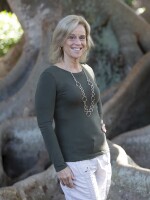
But one Carrollwood author's book aims to lift the curtain on America's lead federal agency — giving people a "more realistic view" of the gig.
Al Scudieri was the man for the job, considering he spent three decades with the FBI. This includes investigations into organized crime right here in the Tampa Bay area. He even had a hand in the undercover operation that inspired the 1997 movie "Donnie Brasco." He also worked a corruption sting that led to the arrest of three Hillsborough County commissioners in 1983.
His memoir is called "A Fortunate Fed: Behind the Scenes in the Life of an FBI Agent." The 30-year veteran agent gives a deep dive into real case stories.
"From corruption and fraud to high-stakes federal operations, this is the FBI behind the scene revealed with unmatched authenticity," the book synopsis reads. "Unlike fiction, these are lived experiences that shaped careers, made headlines and changed lives."
On "Florida Matters Live & Local," Scudieri talked about investigating the mafia, what he wants people to know about being an FBI agent and more.
This interview was edited for clarity and brevity.
What made you decide now is the right time to tell your stories?
For a while after I retired, I was the national president of the former agents society. I got to keep my finger on the pulse of what was going on essentially with the FBI and outside.
And I became concerned with the large amount of negative press that the FBI was getting — the books that were being published, news stories that were coming out — and I thought I'd try to do something that was a little more uplifting and a little more positive from the perspective of the FBI.
"I think when they see that FBI agents are not exactly what you see on TV — the excitement and everything is sometimes there, but not perpetually there."Former FBI Agent Al Scudieri
For people who pick up 'A Fortunate Fed,' what do you hope surprises them most about life as an FBI agent?
I think when they see that FBI agents are not exactly what you see on TV — the excitement and everything is sometimes there, but not perpetually there.
But I think when you see that they're just average people that go home at the end of the day to their families, to their pets, to their hobbies, they go on vacations and they have interesting and sometimes humorous things that happen to them on the job and off the job.
I tried to portray that all in the book so people would have a more realistic view of what it was like to be an agent.
One of your chapters focuses on corruption here in Hillsborough County, including the arrest of three county commissioners. Can you remind us a little bit about that case and then looking back, how did it change local government?
When I first arrived in Tampa and for a decade or so after I arrived, there were persistent complaints about corruption in the county commission. People were scratching their heads over decisions — votes that were made.
People were trying to rezone properties that had formerly been orange groves or cattle ranches, and they wanted to develop housing developments on that property. So they had to submit applications to the county commission and on a number of occasions, the applications were insufficient. They didn't have the proper infrastructure, or they caused problems or potential problems in the area, and there were real questions about them.
Nevertheless they would pass ... there were five members of the commission usually on a 3-2 vote. The three men on the commission voting against the two women.
Eventually, an engineer came forward named Pick Talley, who I think is the real hero of this story. He had representing one individual that owned parcel of property in Northwestern Hillsborough County that he wanted rezoned. Pick went ahead and submitted all the appropriate paperwork.
All the I's were dotted. All the T's were crossed, and he waited for a response. And he waited, and he waited, and he waited, and then finally he made an inquiry of one of the county commissioners, one of the men, and he was told that his application would be addressed and accelerated, even if he were willing to pay for it at that time. Pick came to the FBI with the complaint because he sensed there was something wrong going on, and we wired him up.
He went back in and got the commissioner to repeat his demand and put a specific price on what he wanted paid, and he further elaborated that he was not only taking the money for himself, but the other two men on the commission. The payoff was made.
All three of the commissioners were arrested. They all served prison terms. In some cases, a few of them lengthy ones.
And I've been told — and it was my own experience — that that really changed the way business was done in Hillsborough County. There was kind of this old boy network feeling that if you came in and you paid a bribe, you would get things done. And at least for a time, and I think it continues to this day really, we put an end to it.
Now you investigated the traditional Mafia. I know that in your book you don't talk a lot about Donnie Brasco. Others have done that, but you were on that case. Tell us about what was really happening in Florida with that.
When I got here again in the late 1970s, I was assigned to prepare the annual report on the La Cosa Nostra. We had a group of it here that was headed by famous mob boss named Santo Trafficante.
After I analyzed the reports that came in and collated them for the report, it became apparent to me that the traditional mafia in the area was really kind of getting old and inactive, and there was agreement with that assessment. We began to realign our forces to go after other organized groups — motorcycle gangs and things like that.
But there was one last hurrah, and we had a forward-thinking supervisor that came to town named Tony Daniels. And Tony took a local case that we were looking at — some hanger-on from the Mafia from New York had relocated to Pinellas County and started a carting business — garbage business.
And what Tony did is he set up a kind of a faux after-hours club and enticed these people to attend there. The club was wired — video and everything — and it didn't take long until they started inviting their mob friends from Chicago and New York and Miami to come down.
And we were able to record all of them, but things kind of slowed, and we got a shot in the arm when Tony met Joe Pistone, who was an undercover agent working under the name of Donnie Brasco, had been infiltrating the mob in New York for years.
Tony convinced Joe to come down and work at our undercover club. And he did so. As a result of about 2½ years of recording ensued after he joined the team, we were able to arrest more than 100 people nationwide involved in what was left of the La Cosa Nostra at the time.
What would you say to someone who wants to start a career as an FBI agent today?
I personally think it'd be a great career for somebody wanting to start out today and looking for a field of endeavor. When I wrote the book, I had several things in mind, and one of them, as I said, was to portray the FBI in a more favorable light.
But one of them was to provide some insight to people that might be interested in entering the FBI as an occupation to see what it's really like and to see the breadth of the investigations
The FBI investigates more than 250 types of criminal investigations or criminal matters, and so those were the reasons. And I hope I accomplished that.
This story was compiled from an interview conducted by Cathy Carter for "Florida Matters Live & Local." You can listen to the entire program here.