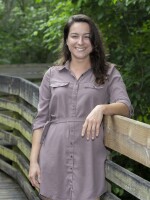
Florida has scheduled its first trial over claims against the weed killer Roundup by a man in the Fort Lauderdale area who says long-term exposure led to a cancer diagnosis.
Broward Circuit Chief Judge Carol-Lisa Phillips ruled recently that federal law does not preempt the claims brought by Alexander Palacios, 37, who was diagnosed with non-Hodgkin’s lymphoma at age 34.
That ruling drops the state in the center of a national legal clash over whether the Federal Insecticide, Fungicide, and Rodenticide Act shields Germany-based Bayer, which acquired Roundup creator Monsanto in 2018, from state laws that protect consumers.
"There have been a lot of trials in Missouri, in California, Pennsylvania, Georgia state court, New Mexico. But it's the first of its kind in Florida,” said Daniel Di Matteo, an attorney representing Palacios.
ALSO READ: Maker of Roundup weedkiller asks Supreme Court to block lawsuits over cancer warnings
He’s also watching for a potential U.S. Supreme Court review after the 9th and 11th Circuit Courts of Appeal were split with the 3rd Circuit Court of Appeal on the federal preemption theory.
“The Supreme Court is going to be ultimately be the final word on whether the FIFRA Act … does, in fact, preempt state law claims against pesticide manufacturers,” he said.
Di Matteo’s client had no known risk factors, he said, other than years of Roundup exposure as a landscaper.
“These are people, ordinary consumers, that have been exposed to the product through the ordinary intended use of the product,” said Di Matteo.
Roundup's main ingredient is glyphosate, which has been classified by the International Agency for Research on Cancer as “a probable human carcinogen.”
Despite conflicting findings from IARC, the U.S. Environmental Protection Agency says glyphosate is "not likely to be carcinogenic to humans" at expected exposure levels.
But federal courts have ordered the EPA to reevaluate, citing ignored cancer and endangered species risks with the next major decision expected in 2026.
Palacio’s case is set for trial at the 17th Judicial Circuit Court in Fort Lauderdale on March 9.
A Bayer spokesperson said via email the company has "a winning record at trial, achieving favorable outcomes in 17 of the last 25 cases."
“While we have great sympathy for the plaintiff and his family, the evidence to be presented at trial will show that more than four decades of scientific research, " the spokesperson said.
"And consistent favorable assessments from the EPA and other leading health regulators worldwide support the conclusion that glyphosate-based herbicides are not responsible for the illness at issue."
ALSO READ: Florida bill part of renewed effort to shield weed killer maker from cancer lawsuits
His cancer went away for a short period and then it came back. He's now undergoing his second course of immunotherapy.
“Best case scenario: he's looking at a lifetime of constant medical monitoring and observation and living under the cloud that at any given point in time his cancer can come back,” Di Matteo said. “And the worst-case scenario is — it pains me to say this — early death.”
He said the jury will hear about Palacio’s pain, stress and fear of leaving his young son fatherless.
“The regret and shame that he feels for having exposed himself to this dangerous carcinogen,” Di Matteo said. “What's a life worth? That's ultimately going to be the task of the jury.”