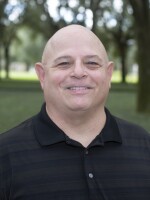
Hillsborough County Commissioner Joshua Wostal said the Tampa Bay Rays paid to send automated emails and online advertising to government officials to pressure them into finalizing a deal to build a $2.3 billion stadium.
Wostal, a critic of using public money on the project, told WDAE radio that county staff identified online ads and emails tied to one IP address in Los Angeles submitted through the county’s public comment system.
Wostal said the county staff is still reviewing the activity, but “substantial evidence” has been collected internally as part of an ongoing investigation.
A county spokesperson told WUSF that multiple emails were submitted through the “Contact Your Commissioner” form online.
“Staff identified the originating IP address, which appears to be based in L.A.," the spokesperson said, adding that 2,767 forms have been submitted as of Thursday morning.
The Rays have not commented on Wostal’s accusation or the county’s investigation.
“We … saw bot activity testing our public system, followed by over 2,000 pre-written emails,” Wostal said Wednesday on WDAE’s “Pat & Aaron Show.” “Many people said they didn’t even know their name was being used. We’re investigating that.”
The Rays want to build the stadium on land now used by Hillsborough College and have committed just over half of the needed cash, with the rest coming from the city and county. The stadium would anchor a privately developed multi-use district, with future property tax growth helping to repay public bonds tied to the project.
ALSO READ: Hagan says Rays stadium will have 'zero impact to taxpayers.' Wostal replies, 'nonsense'
“They’ve been effective at using pressure tactics, including online ads and email campaigns targeting commissioners,” Wostal told WDAE. “I think they may pressure commissioners into voting yes on what people are calling a memorandum of ‘demand’ – not ‘understanding.’ ”
Wostal also reiterated concerns that Rays ownership does not have its portion of the financing, and the stadium agreement plan would rely heavily on public dollars up front.
“Don’t buy a business if you’re not prepared to close the deal. It’s not our responsibility to fix your shortcomings,” he said.
Commissioners have requested proof from the team regarding its financial wherewithal, without success.
The Rays have pointed to previous statements by CEO Ken Babby. In the April 16 memo to commissioners, he wrote: “The Tampa Bay Rays stand ready to commit $1.235 (billion) privately to fund our community’s ballpark via this public-private partnership.”
ALSO READ: In reply to county, Rays push for May vote amid unresolved stadium funding issues
In that same memo, Babby warned the Rays would “evaluate options” if an agreement was not finalized by June 1, citing increased costs due to delays. The county said it could not meet that deadline because of unresolved issues, including a request to review the amount and sources of the team’s financing. In a reply, the Rays said that information would be provided “at the appropriate time as is standard with similar public-private partnerships.”
That back-and-forth followed an economic impact study by AECOM, which was completed using “assumptions” because the Rays refused to provide details related to the stadium and privately funded mixed-use development, county staff said.
“Don’t buy a business if you’re not prepared to close the deal. It’s not our responsibility to fix your shortcomings."Joshua Wostal, Hillsborough County Commissioner, to WDAE's "Pat & Aaron Show"
“For example, I asked if we had received proof of funds. Staff confirmed no, despite repeated requests,” Wostal said.
"They need 100% of taxpayer cash up front for phase one because they don’t have their own funds, so they use that to leverage phase two. If phase two doesn’t happen, taxpayers are at extreme risk. That was confirmed in the AECOM report.”
One risk would come in the form of financial reserves, partially funded by ad valorem taxes — even if no formal tax increase is enacted.
“Part of their deal is over 10% of people’s property taxes — money we’re saying we don’t even have enough of to maintain our current infrastructure,” Wostal said.
ALSO READ: Baseball stadium proposal roils Tampa’s political scene
However, his “biggest hang-up” remains the team’s demand to use money from the Community Investment Tax, which voters renewed in 2024 for 15 years.
“We unanimously promised taxpayers of Hillsborough County that the CIT tax was not going to be used for new professional sports stadiums,” Wostal said. “… This was supposed to be special taxing districts and CDD-type mechanisms, which I supported.
It was brought to my attention that after I ended my interview on the @PatandAaronShow this morning one of them suggested I insinuated Hagan lied. This is completely untrue. I said exactly what is in this video on the public record, which is that I support Hagans user fee model… pic.twitter.com/opO8VXVsfZ
— Joshua Wostal (@JoshuaWostal) April 29, 2026
“But the Rays have denounced that since day one. They’ve rejected any structure that creates accountability, which is why they pushed for a different mechanism behind the scenes.”
The team recently presented a framework of a deal that requires $1.001 billion in public funds. County leaders have identified $702 million from the county and $224 million from the city of Tampa. A $75 million gap remains to be negotiated.
ALSO READ: Atlanta economist warns Tampa: Mixed-use districts don't reverse dismal stadium math
Wostal presented a plan that uses a portion of tourist taxes over a 35-year lease that would raise more than $730 million for the stadium. As an annual incremental payout, however, it would require the team to front far more than it has committed for construction.
“I offered the Rays 100% of the money they were asking for over a 35-year lease,” Wostal said. “I’m the only elected official who did that. That was rejected. I then asked if we had proof of funds again, and the answer was still no.”
Wostal said the Rays’ actions have led him to mistrust the ownership group.
“I was promised transparency. Instead, they used lobbyists and pressure to try to beat my vote for transparency,” he said. “They shifted away from the original funding mechanisms we were promised, and that’s what they were trying to keep from public view.”
The Tampa City Council is hosting a public workshop to discuss its part of the stadium financing on Tuesday at 5 p.m. at Old City Hall, 315 E. Kennedy Blvd. The agenda calls for presentations by the Rays, the city and Drew Park Community Redevelopment Area. Public comment will be heard after the workshop.
Votes on the memorandum of understanding were originally scheduled by the county and city for next week. As negotiations continue, it’s unknown when the agreement will be considered.