The central argument against public funding of professional sports stadiums is simple: Billionaires should pay for their own ballpark with no taxpayer dollars involved.
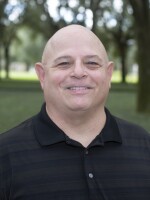
But Hillsborough County Commissioner Ken Hagan says a proposed $2.3 billion stadium for the Tampa Bay Rays will have “zero impact to taxpayers” and won’t require any tax increases.
The team recently presented a framework that includes $750 million from the county, $251 million from the city and $64 million from other public sources to be determined.
The financing mostly relies on “existing, restricted revenue sources” such as levies on lodging and the future taxes raised from the Drew Park Community Redevelopment Area, Hagan said Tuesday on WDAE radio’s “Pat and Aaron Show.”
ALSO READ: Rays threaten to 'evaluate alternatives' if Hillsborough balks on stadium funding
“Those funds can only be used for specific purposes like tourism-related activities or redevelopment in designated areas,” Hagan said. “They cannot be used for schools, school lunches, roads, fire services or law enforcement.”
Commissioner Joshua Wostal, however, insists Hagan’s framing is misleading, arguing the proposal still puts public money and financial reserves on the line — even if no formal tax increase is enacted.
“Nonsense statement for anyone to make,” Wostal wrote in a post on X. “They are literally trying to raid property taxes and catastrophic reserves, [it’s] all on the public record.”
Nonsense statement for anyone to make. They are literally trying to raid property taxes and catastrophic reserves, its all on the public record.
— Joshua Wostal (@JoshuaWostal) April 21, 2026
At a commission workshop last week, county staff presented the option of using up $132 million from reserves accounts set aside for capital maintenance, catastrophes and econominc development., while acknowledging “using reserves will reduce budget flexibility.”
Many reserve accounts come from general revenues such as sales and property taxes. Hagan said the team will be expected to cover such shortfalls. It's among the concessions from the Rays still being negotiated.
"So in the event of an economic downturn, the Rays would need to, in our terms, backstop or guarantee that the county is made whole," he said.
ALSO READ: Rays stadium talks create friction on Hillsborough County Commission
Despite that, critics such as Wostal have argued that relying on such guarantees still places public funds in play, particularly if projections fall short or agreements fail to hold.
The county also wants the Rays to cover a $75 million shortfall in public funding outlined during the workshop.
“I say somewhat jokingly, on a $2.3 billion project, that’s almost a rounding error,” Hagan told WDAE.
Hagan said capital expenditures must also be worked out. The proposed lease agreement requires the Rays pay for the maintenance, repairs and insurance for the stadium.
“We are looking at a 35-year use agreement that requires significant maintenance and capital improvements,” Hagan said. “We need assurance the Rays will cover those long-term costs.”
The stadium is planned for roughly 130 acres in Tampa’s Drew Park area currently used by Hillsborough College’s Dale Mabry campus, with the team pledging to cover half the construction cost and all overruns.
ALSO READ: DeSantis 'flip-flop' on pro sports tax subsidies divides Republicans
The stadium would anchor a larger privately financed mixed-use development projected to generate long-term city and county tax revenues over 30 years that would, in part, help offset the public investment in the project. The project includes a rebuilt college paid for by the state.
Another concern has been the use of the Community Investment Tax, a half-cent sales tax that was renewed for 15 years by voters in 2024.
“About 40% of the funding may come from CIT funds, but those are also designated revenue sources,” Hagan said on the WDAE show. “We are not taking money away from existing projects.”
Hagan noted the stadium investment, “from a return-on-investment standpoint ... makes strong economic sense.”
He repeated estimates from independent consultants: $2.8 billion in government revenue, and $75 billion in direct and indirect economic impact over 30 years.
“The area around the proposed site, which has been a Community Redevelopment Area for decades, has only generated about $28 million in property tax revenue in 22 years. Projections show it could generate $97 million over the next 30 years,” he said.
ALSO READ: Analysis touts economic impact of Rays' proposed stadium-anchored development
It's a complex deal, he said, but maintains the investment can be done without peril to taxpayers.
“From the beginning, our guiding principles have been that we would not do anything that jeopardizes the county’s AAA credit rating and that we would not put the public at risk.”
Hagan claims Hillsborough is one of about “30 counties in the nation” with a AAA credit rating from all three major agencies.
“We are fiscally conservative and financially strong, and we are not going to jeopardize that,” he said.
The commission is expected to vote on a financial agreement May 6.