Gloria Merriex was once just your typical teacher adhering to the Alachua County School District's curriculum. But during the early 2000s, something changed.
Her school, Duval Elementary in East Gainesville, failed the Florida Comprehensive Assessment Test (FCAT). That's when she decided to take a risk despite the institution being monitored.
She created her own curriculum — infusing music and dance — to make math and other subjects fun and accessible for students. Within a year, she helped catapult the school to an A.
Merriex passed away in 2008, but her legacy remains strong to this day. So tangible that a documentarian spent over a decade making her story come to life.
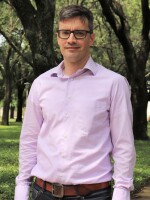
Boaz Dvir's film on Merriex called "Class of Her Own" is showing at the Dunedin Film Festival on Thursday, Jan 22, at 3:30 p.m. It's also available for free on major streaming platforms like Amazon Prime and Apple TV.
On "Florida Matters Live & Local," Dvir explained how he got involved in this project and more.
The interview below has been edited for clarity and brevity.
Gloria was taking a risk using music and other methods. What does that say about her as a teacher?
It says that she cared. It says that she was able to change. She took a humongous risk. She risked really losing her career.
She was told, "Listen, you gotta stick with the curriculum, and you gotta stick with the pacing guide." And she said, "But I've been doing that for 25 years, and what good has it done?"

She realized that the whole notion was wrong: That if these kids came from broken homes and high-poverty kind of landscapes, it was OK to just be happy if they passed, and when the school failed, she realized, no, no, I can't keep doing that.
So she raised her expectations of herself and of her students at the same time, and she said, "No more." She threw away the curriculum. She wrote her own curriculum.
Why? She wanted to be accessible. She wanted to be relevant, encouraging and engaging to her students.
They paid no attention to the pacing guides whatsoever and really took a chance. And the school even was not happy.
Not only the district, which was very unhappy with her, but even her own colleagues were saying, "Wait, we just failed the FCAT. Do you really need to be doing all of that? Do you really need to bring more heat onto the school?"
But she stuck to her guns. She brought in a principal to watch the kids learn at a whole new level. And the principal, God bless her, [Leanetta] McNealy, she said, "You know what? I'm going to join you in this rebellion." And it worked.
How did you get involved in this project?
So sadly, I did not hear about Gloria until after she died in 2008.
I was at the University of Florida. I was in the same town, and I'm ashamed to say, as a journalist, as a documentary filmmaker, that it took me that long to find out about the story.
And then my initial approach was to really chronicle the school itself, because here was a school in a very low socioeconomic part of the town that had become one of the best schools in Florida. It's extremely unusual nationally to see that. So I was fascinated.
I was given unparalleled access to film the school for a year, and everyone thought, "Oh, we will do OK still, even though Gloria is gone, we'll do OK. We'll get it. We'll ace the FCAT, maybe we'll drop to a B."
But the school failed. And when the school failed, I realized I don't have a documentary here. What's the real story? I can't make an audience sit through an inspirational story at the end of which the school fails, right? It's unfair to everyone involved. So I realized it's Gloria.

Were you able to use a lot of archival stuff?
I was lucky because Gloria was a master teacher and one of the most innovative teachers, really, in American history. We're talking about someone extraordinary who will become part of history, I believe, whose story will be told down the line.
Because of that, scholars — including graduate students, professors, researchers — studied her, and some of them, on occasion, filmed what she was doing in the classroom, and a couple even sat down and ask their questions — mostly technical, pedagogical kind of questions — but nonetheless, they were generous enough to share that footage with me, and so I was able to bring some of that rawness. Here it is. Here's what it actually looked like in real time in the documentary.
And really, I don't think I have a good documentary without that. So thank God they did it, and thankful that they shared it with me.
You were able to screen the movie in Gainesville. What was the reaction to Gloria's family and friends seeing her story come to life?
They were singing along, they were dancing, they were crying, they were laughing, they were hugging, they were kissing, you know, they brought me into the fold, they gave me hugs so I was very lucky.
They really treasured this opportunity to be with Gloria again. She was such a magnetic personality that even to be in her presence was impactful for folks, and so to be with her again, and for all of us to be together with her again, was a special moment, and I was thrilled to be part of it.
"...Everywhere I went where it was always sold out and tons of people came, I kept hearing, "No, this belongs to a big audience. It's not just for educators."Boaz Dvir
I also have built a kind of relationship with them over the years, so open that they would tell me if there was any sort of an issue, or if I missed something or told something not in the most accurate way.
And I'm a stickler, being a journalist, for getting it exactly right, but they said that somehow, luckily, this time, we nailed it. There she is. We got it right.
You don't always get 16 years to make a movie, right? So having that time to develop and foster those relationships with people is quite unique.
In 2009, I realized I don't have a film. I have to start from scratch and focus on Gloria, which was a blessing in disguise from a filmmaking point of view.
Then I spent a few years doing that. I interviewed about 50 people, again, former students, family members, scholars, colleagues, you name it, all over.
And then I put the film together, which was then a half-hour film called "Discovering Gloria," which I meant as a pedagogical film for educators. And I screened it around the state in conjunction with school districts.
And everywhere I went where it was always sold out and tons of people came, I kept hearing, "No, this belongs to a big audience. It's not just for educators."
So for a while, I was using "Discovering Gloria" in academic settings, and then one day, a few years later, it hit me. You know what, I really do need to make a feature film for everybody, and that's "Class of Her Own." That's when that came about.
And I finished that in '23, but then it took a few more months to be released, and then it was out on all major platforms, including right now for free on Amazon Prime, Apple TV, etc. It's screened in more than 20 film festivals around the world, including Finland and Canada [and] Russia. So it travels better than I ever expected.
You can listen to the full interview in the audio player above. This story was compiled from interviews conducted by Matthew Peddie for "Florida Matters Live & Local." You can listen to the full episode here.