

The Dandelion Project began as a mother-and-daughter mission between Lisa Bolton and her daughter, Kerri Fernley, to honor the memory of Bolton's son, Donald Jerald Fernley, who died shortly after birth in 1989.
That mission expanded when Bolton's 18-year-old daughter, Quinn Bolton, died from a rare autoimmune disease in 2015. Three years after her stepsister passed away, Kerri died at age 26 from a drug overdose.
Now, Bolton has officially established the Dandelion Project in honor of all three. Since its official start in 2023, the project has provided support, education and resources to those grieving the loss of loved ones, raising grandchildren or struggling with mental health issues and substance use disorder.
A recent addition to the project is a wind phone at Ocala's Highland Memorial Park, the first of its kind in North Central Florida. A wind phone is an unconnected phone or phone booth placed outdoors in a peaceful setting where people can “call” a loved one who has died. There are hundreds located around the world.
Bolton, who lives in Ocala, spoke to WUFT about the Dandelion Project and the wind phone.
The interview has been condensed and edited for clarity.
Can you tell me a little more about the Dandelion Project and its mission?
The Dandelion Project was a dream that my daughter and I had to begin with, to honor the loss of her brother, who passed away due to complications of his birth in 1989, and back in 1989, they didn't do half of the stuff that they do today. So I wound up holding onto that grief for 30 years until she walked in one day and saw me looking at papers and asked me who he was, and I had to explain it all to her.
From that moment on, she never let me forget. So we wanted to do something like an infant color program or something. At the time, I was going to school to be a stillbirth doula, and I met a woman in the class, and she said, "Oh, my God, I love what you wanna do. It sounds like you wanna spread love the way a dandelion spreads its seeds. You should call it the Dandelion Project." I wasn't real crazy about that.
I had just found out that Kerri, my daughter, was struggling with substance use disorder. So when she was in active addiction, she would doodle, and she would send me things. At 3 o'clock in the morning, she sends me a message with the dandelion picture that she had drawn. So I said to her, "Did I tell you that Ms. Laura said we should call it the Dandelion Project?" She said no. So now we had our logo, and we had our name.
Then her 18-year-old stepsister passed away in 2015 from a rare form of autoimmune encephalitis. So we tweaked it a little bit so that we could kind of incorporate both the infant loss and the child loss. Then in 2019, I lost Kerri to an overdose of heroin, laced with fentanyl. So we had to tweak it again.

What did grief look like for you when Kerri first passed away?
She was 26 years old, and we had the relationship in the end that if you had said to me, "You're gonna be closer to your daughter than anybody on the face of this Earth, when she was 16," I would've laughed and been, like, "Yeah, OK." Because it was the typical mother-daughter headbutting, but I think her addiction actually brought us closer together, and we just had such a bond in those last few years.
We talked every day. She would know when something was wrong with me, and I would know when something was wrong with her. Every night we were on the phone. We were talking the night before she passed. We were on the phone for hours. We got off at like 1 o'clock in the morning, and at 5:11 a.m. on Jan. 25, her stepmom called me, and all she could get out was, "Kerri is gone." It totally blindsided me because she was in recovery for a couple of months.
She was doing really well. Of course, I didn't know as much then as I do now about addiction and recovery. I just remember everything going blank, everything, and then I went into just the planning phase. But the worst stage for me has been the anger stage. I've been in that stage for seven years.
That's just how I handle grief. I don't mean like I'm punching things and I'm exploding. It's just that I'm angry. I'm not angry with God. I'm not angry with Kerri. I'm just angry that our circumstances took us down this road, and I'm angry that I have to spend the rest of my years without her.
What's something you would say to her?
I would probably tell her, um. I'm not mad, that I miss her terribly and that I will carry on her legacy for her. This has never been about me; it's been about them, the kids, and telling her that, you know, she's making a difference and she's saving lives. She may not be doing it here next to me, but she is doing it next to me, and it's because of her and the other two that we have been able to go as far as we have so far.
What do you want people to understand about grief when someone passes away?
Grief is different for every single individual, depending on the reason or the loss. It's a personal journey, and people can support you through it. Ultimately, you have to take that journey on your own. There's not one way I could say it looks. There's not, you know, the five stages of grief and all that.
I've had people think that you actually follow the five stages of grief in order. I tell people all the time that's not the case. You might start with this one and jump to this one, and then go back to this one. You know, you have to feel it, and I'm a fine one to talk to because I don't always do that myself.
I would say to people that are supporting somebody in grief: The term move on is one that makes me so angry because three months after Kerri died, I actually had somebody say to my husband, "When is she gonna move on?" My brother was sitting there, and he was like, she's not, that was her daughter and he got just as upset. There is no moving on. You're never gonna move on, especially when it's a child. You're not supposed to bury your children before you. It's out of order.
You know, Kerri and Quinn led wonderful lives. Kerri was an extraordinary young woman who would give somebody the shirt off her back, and I'm not going to forget that. I don't want anybody else to forget that either.
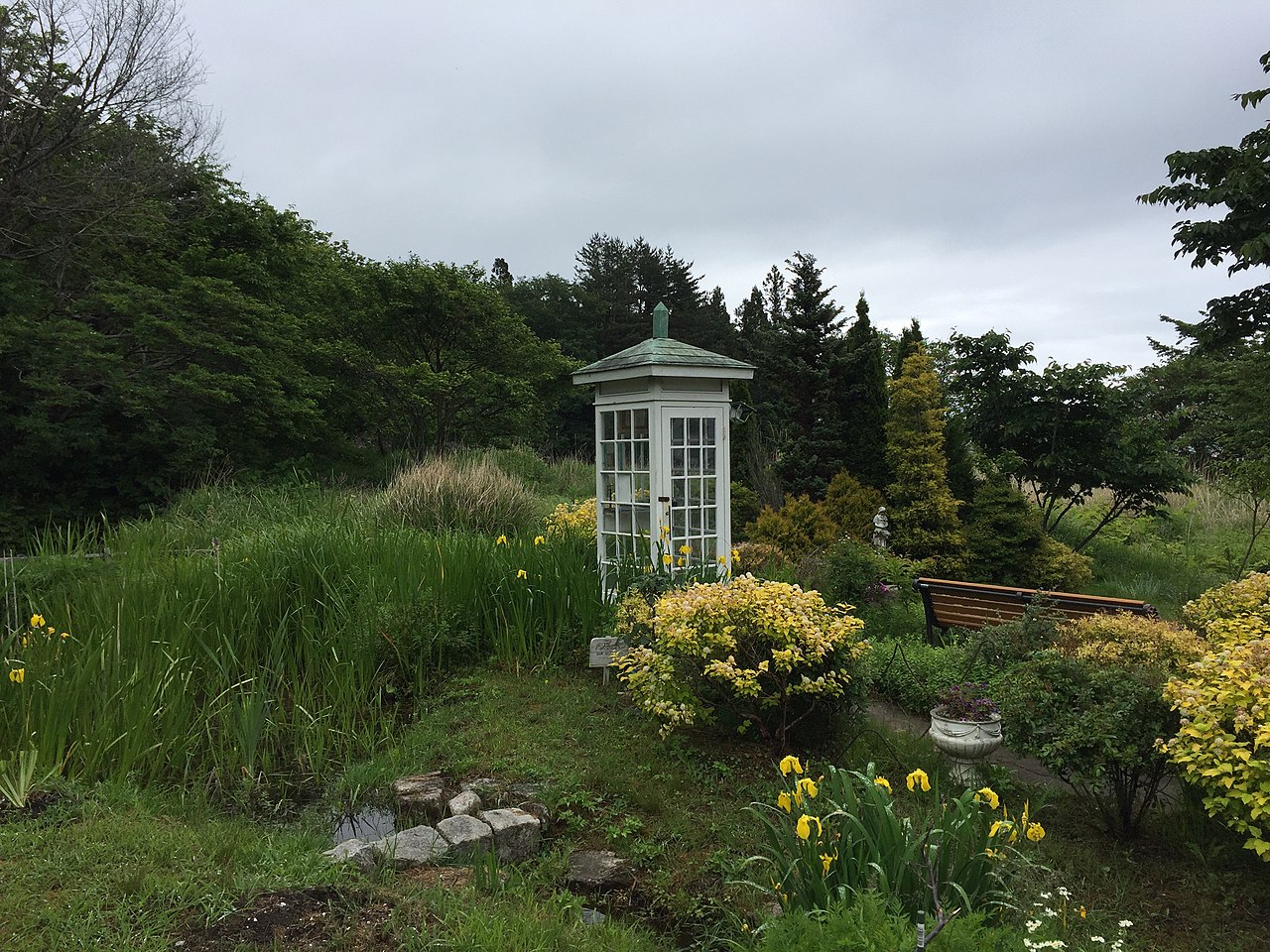
A memorial you can call
A wind phone is an outdoor, unconnected telephone where people can symbolically “call” a loved one who has died. The receiver isn’t connected to any line, but it gives visitors a private place to reflect and speak their thoughts.
The first wind phone (pictured) was installed in Japan in 2010 by garden designer Itaru Sasaki, who wanted a way to cope with the death of a cousin. After the 2011 tsunami, it became a destination for thousands seeking a personal memorial.
Wind phones have since spread worldwide, appearing in cemeteries, parks, and memorial gardens. Each provides a quiet space for reflection and a tangible way to express grief.
Learn more at mywindphone.com.
— Rick Mayer
Can you tell me a little more about how the wind phone fits into your mission at the Dandelion Project?
At the Dandelion Project, we look for ways to help people on their grief journey. So we do memorial services, we do butterfly releases. I'll just sit and meet you for coffee. I've had people say, you know, "I wish I had said this, I wish I had said that. I wish I could help them. I don't know how to make them understand that."
When I found the wind phone website, I thought, this is perfect. This is something I myself would do: go to the cemetery and call on the phone. With our logo, with the seeds that the dandelion seeds fly, you whisper what you wanna say to the person into the phone, and the wind takes the message. I think it's just a soothing thing for grieving people, grieving families.
What do you think happens emotionally when someone picks up that receiver?
What I hope would happen is that they would pick it up, and they would send their message up, and they would feel a sense of purpose, like, this message is gonna get there. I know that when I was just standing by it, just the thought of talking into it gave me a very warm feeling. But I would hope that it would give them a sense of being able to communicate, knowing that their message was getting there, that this was a venue or a way for it to get there.
Copyright 2026 WUFT 89.1

