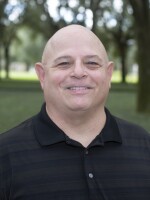
Stephen Garcia, a former high school and college quarterback, always considered himself a “tough guy” — as “prideful as they come.” He also called himself “hard-headed.”
So, he dismissed months of abdominal pain and unusual bowel habits until his wife forced him to undergo medical testing.
The Tampa native and former University of South Carolina quarterback was diagnosed with Stage 4 colorectal cancer and is undergoing an aggressive treatment to save his life at Moffitt Cancer Center.
ALSO READ: Actors' deaths highlight growing risk of colorectal cancer for Americans under 50
Garcia, 38, who led Jefferson High School to the 2004 state championship game, went public with his diagnosis this week and hopes to raise awareness about early testing for cancer detection.
"I want to encourage people to get checked out, and if I can use my platform to save even one person, or get one person to say, 'Man, I don't feel right. I need to go get checked out,’ I think the job is done," Garcia told reporters during a Friday video conference.
Garcia’s diagnosis comes after the American Cancer Society recently listed colorectal cancer as the top cancer killer of Americans younger than 50. Recent advances have made many cancers more treatable, but not colorectal cancer. The reason for an increase among younger patients remains unknown.
“I’m not dead yet. I’m confident I’ll beat this, one day at a time,” said Garcia, a father of three.
Garcia said his treatment plan begins with four to six cycles of chemotherapy. Doctors are going with an effective but toxic four-drug regimen called Folfirinox. If the tumor shrinks, the next steps are radiation and surgery to remove any remaining cancer cells.
“There's no other plan B … and I have complete faith in the team that I have around me,” Garcia said.

Bulletproof procrastination
In July, Garcia said he began dealing with persistent dull aches or cramping in his left-lower abdomen along with inconsistent bowel movements. He brushed the symptoms off as "irritable bowel syndrome or something," but they didn't subside.
In April, at the insistence of his wife, Maria, he finally got tested. An ultrasound showed a few spots on his liver, then an MRI detailed two lesions on the liver. A colonoscopy and biopsy confirmed cancer in the colon with liver metastases.
ALSO READ: Tampa's Wade Boggs says he's cancer-free nearly two years after diagnosis
Doctors estimated the tumor had grown undetected for three to seven years.
Garcia blamed the procrastination on a bulletproof mentality common among “a lot of guys my age” — especially in the sports industry.
“It’s like ‘I can change oil. I don't need to go see a doctor to figure out what's wrong with me,’ ” he said. “They're so used to taking care of themselves and doing their own thing and feeling invincible. And, you know, for the most part, I feel like we are.
“But there's certain times. … One thing I wish I would have done is listen earlier.”
Experts say late detection is a key issue as colorectal cancer cases increase in people under 50 — the incidence has risen nearly 3% since 2013, according to the cancer society.
That’s why Garcia feels the need to get the word out.
"If you feel off even a little bit, put your pride aside because I'm as prideful as they come and it took my wife about six or seven months for her to kick my ass into seeing the doctor," Garcia said. "It was seven months too long."
Please use #quarterbackyourhealth and help encourage guys to their health checked and back in the game. I appreciate the overwhelming support from everyone and hope to continue spreading this important message!! pic.twitter.com/hdqG5IfOcX
— Stephen Garcia (@StephenGarcia) May 8, 2026
From high school to the SEC
Garcia was a blue-chip quarterback at Jefferson High School from 2004 to 2006, breaking Hillsborough County passing records with 8,081 yards and 84 touchdowns while leading the Dragons to the playoffs each year, including finishing as a state runner-up as a sophomore.
ALSO READ: Scientists search the microbiome for clues to the rise in colorectal cancers
Garcia was recruited by coach Steve Spurrier to South Carolina, where he dealt with multiple suspensions for off-the-field issues and was dismissed from the team midway through his senior season. However, he started for two seasons and took the Gamecocks to the 2010 SEC East Division title.
After graduation, he spent one season in the Canadian Football League and another with the Tampa Bay Storm of the Arena Football League.
He currently works as a personal quarterback instructor in Tampa. His doctors have recommended that he work and stay active during treatment.
GoFundMe and an outpouring of support
Garcia explained it wasn’t easy to tell friends and family about his diagnosis. The news spread through a GoFundMe account his wife started to help with medical expenses. As of Sunday night, $223,545 was raised with a goal of $250,000.
Thank yall from the bottom of my heart! Having the amount of support has been truly breathtaking and extremely helpful. One bite at a time! 🙏 🙏 pic.twitter.com/y4mfl0FFcS
— Stephen Garcia (@StephenGarcia) May 7, 2026
Since then, the outpouring of concern has been overwhelming, Garcia said. Aside from sports figures such as Spurrier, South Carolina coach Shane Beamer and Clemson coach Dabo Swinney, he has received social media support from hundreds of strangers.
“People that have messaged me, like, ‘Hey man, I've gone through this personally,’ you know, my aunt, my uncle, my family. … ‘If you ever need anybody to talk to, please lean into me,” he said.
That support has helped him embrace the importance of mental health care, something he considered “a joke” until recently, “but I was extremely hard-headed.”
“You got to stay mentally in it, you know, and it's if you are positive mentally, you're going to get through it. If you start feeling like you're down in the dumps, figure out a way to get positive."