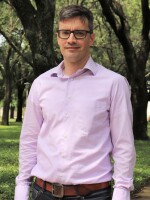
The 2024 hurricane season may be a distant memory for some.
But for St. Petersburg resident Kevin Batdorf, the floods that drenched his Shores Acres neighborhood prompted his run to be the city's mayor.
Batdorf was the Shore Acres Civic Association president at the time and says he wasn't happy with the city's response after more than 80% of the homes in the neighborhood flooded.
According to his campaign website, he is "committed to practical, effective solutions for the challenges facing St. Petersburg today and tomorrow."
His priorities include having "proactive, long-term solutions" for stormwater drainage and other critical infrastructure systems, smart development, economic development and more. His expertise includes co-founding Sun Time Novelties and building a real estate career with Batdorf & Associates. He has also served as president of local, state and national realtor associations.
The election is on Aug. 18, but if no candidate wins a majority, there will be a runoff on Nov. 3.
ALSO READ: St. Petersburg mayor on his focus to fulfill a promise to the Historic Gas Plant District and more
Batdorf is facing off against incumbent Mayor Ken Welch, former governor and congressman Charlie Crist, St. Petersburg city councilmember Brandi Gabbard, former St. Petersburg fire chief Jim Large, former president of the NAACP St. Petersburg branch Maria Scruggs and previous mayoral candidate Paul Congemi.
On "Florida Matters Live & Local," Batdorf described his focus on infrastructure improvements with "smart funding" that doesn't burden homeowners, affordable housing and more.
The interview below was edited for clarity and brevity.
Are you satisfied with the way St. Pete is headed? Why do you want to be mayor of St. Petersburg?
Well, unfortunately, through my experience with the current administration, I just don't see a path forward for that to continue. There have been so many mistakes made that we need to get our city back on track.
Do you think you'd be running for mayor if St. Pete hadn't been hit with back-to-back storms back in 2024?
Probably not.
Let's talk about some of the issues that you talk about in your campaign literature. So, infrastructure, you talk about smart funding that doesn't burden rate payers or residents unnecessarily for things like improvements to streets, utilities, storm waters, drainage. How do you pay for it without burdening residents?
The current administration wants to put a GO bond — a general obligation bond — on the ballot for $600 million. I don't know that that's necessary.
We have assets that can be leveraged several different ways, and one of them happens to be the Gas Plant District.
How would that work?
It's an interesting scenario that we have available to us.
The mayor wants to push through a development of that property [Historic Gas Plant District]. We haven't had an actual appraisal for [the] highest and best use for that property.
"I would probably look into moving city services from downtown to a location that's more centralized."St. Petersburg mayoral candidate Kevin Batdorf
If we could determine what the actual value of that property is, we could leverage that to offset the improvements to the infrastructure throughout the city. That and a couple other assets.
I would probably look into moving city services from downtown to a location that's more centralized.
ALSO READ: St. Petersburg mayoral candidate Maria Scruggs on affordability, 'economic clusters' and more
We could utilize that building space. We could sell that to someone who wants to build in downtown. We could create a more modern facility for probably less than what we would get for that property, so that would be additional money towards infrastructure. We need to update a lot of systems within the city.
The permitting system is completely broken, in my opinion.
It didn't work. After the hurricanes, there was absolutely no plan in place to handle 12,000 permits, especially for the people that became homeless immediately after the storm, because everybody whose home flooded became homeless immediately.

So you're saying permits to get reconstruction repairs done?
Yeah, reconstruction or new permits for new construction. So let's take Shore Acres, for example, 2200 homes had water in them. In Shore Acres, that's 82% of the neighborhood.
A lot of those homes need to be elevated. Our city didn't have inspectors on staff that understood the process of elevating a house at the time.
What could the city have done differently? It was kind of an unprecedented disaster, right?
Here's where the frustration is. In '23, we had Hurricane Idalia.
Hurricane Idalia flooded Shore Acres, Riviera Bay and a couple other neighborhoods in St. Petersburg. So about 82 to 83% of all flooding in St. Petersburg during Idalia was in Shore Acres.
We actually learned what we needed to do after that storm. Those procedures were not put into place after Hurricane Helene. As a matter of fact, they were held back.
One of them was we needed mobile permitting. We needed permitting in the neighborhoods where there were thousands of houses that needed a permit.
They pulled back the mobile permitting, and there's no reason that we're aware of that they did that. And funny thing, when we — we being the Shore Acres board of directors — met with the mayor and his staff, the mayor was unaware that they had done that. That was the moment when I realized that we need better leadership.
One of the other things you talk about in your campaign website is the need for housing that is affordable for folks like teachers, nurses, service workers, so they can live where they work. And you talk about common-sense housing solutions. What does that look like?
So as a real estate broker, I have fought for different programs, down payment assistance, closing cost assistance programs throughout the state.
"As a matter of fact, I'd like to see an area of St Petersburg have a tiny home village."St. Petersburg mayoral candidate Kevin Batdorf.
I've looked at different solutions that have been presented, one of them being tiny homes. For tiny homes to work, you would need to change the code for lot sizes. Putting a tiny home on a 75-by-100-foot lot doesn't make any sense when you could put four of them there.
ALSO READ: St. Petersburg mayoral candidate Brandi Gabbard on affordability, Gas Plant District and more
It definitely wouldn't work unless you were able to change zoning to allow for multiple tiny homes on properties.
As a matter of fact, I'd like to see an area of St. Petersburg have a tiny home village.
Is that something you think you could implement as mayor?
We could probably look into that. It would take not just St. Pete, but the county as well, and maybe the state. But we need to look at those regulations. We need more ADUs [accessory dwelling units or "granny flats"].
We would need more options to allow for that. The simple reasoning is, you have children at home, and your children are going to move out at some point, and they're going to take up housing that should be available to maybe someone else, maybe the nurses and the police.
Why not have a place for them on your property that they can move out and be independent, yet not take up another unit?
So the challenge to affordability is that ... it's supply and demand.
If you don't have enough supply, the rents are going to go up, because the people who can pay for it are going to pay for it.
So the solution is to create more housing.
And we need a lot more housing. Once we do that, then the rents will start coming down.
It comes back down to supply and demand. It's just basic economics.
If we have more supply, then the demand is going to be lower, which means the rents are going to come down. And that's the only way to bring rents down in an area like St. Petersburg or Tampa is to have more supply, and we have to loosen regulations to allow for more supply.
Now, when we're building supply, we also have to use what I call smart development.
Any project that comes before the city, when I'm mayor, is going to have to show what the actual impact on our existing infrastructure is going to be, and they're going to have to offset that impact.
Is there a danger that you could just end up building out the city completely?
We have overbuilt, but it's because we haven't done smart development.
We need to look at the actual impact to the infrastructure that we have. We need to make sure that whatever is built fits within the neighborhood that is being built, and we need to use more modern design standards.
You can listen to the full interview in the media player above. This story was compiled from an interview by Matthew Peddie for "Florida Matters Live & Local." You can listen to the full episode here.