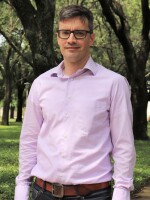
St. Petersburg Mayor Ken Welch is ready for another round of serving the city if voters give him the chance.
His first election was historic as he's the city's first Black mayor. And when he took office four years ago, one of his major visions was to redevelop the Historic Gas Plant District. The historically Black neighborhood was razed to make way for the Tampa Bay Rays' baseball stadium, Tropicana Field.
But things haven't gone exactly as planned — especially the last two years. Two hurricanes in 2024 devastated the area, with Hurricane Milton ripping off the Trop's roof. Then, plans to redevelop the Gas Plant area alongside the baseball stadium collapsed.
As Welch put it, "challenge has been kind of the theme" of his first term, starting his role being sworn in remotely during the COVID-19 pandemic.
But he's not letting the setbacks deter him, and so he's running for reelection to finish what's left on his to-do list.
On "Florida Matters Live & Local," Welch took listeners' calls, talked about the Gas Plant district, infrastructure and more.
Here's what to know.
Passion for the historic Gas Plant District
Welch said during his last campaign, one of the biggest economic issues in the city was what was once coined the "Tropicana Field redevelopment."
The mayor grew up in the Historic Gas Plant District and made it his focus to reissue a new Request for Proposal (RFP) focused on promises that were made to the community some 40 years ago, he said.
ALSO READ: A new documentary takes a deeper look into St. Petersburg's former Gas Plant neighborhood
"Having grown up in that area, having had my grandfather's woodyard displaced by the interstate and our church displaced by the quest for economic development that later became the quest for baseball, I knew that was a community long before baseball was ever thought of," Welch said.
"I'm still determined to honor those promises I made as a candidate and that this city made to our community 40 years ago."St. Petersburg Mayor Ken Welch
So, they reached out to the community and had conversations with more than 1,000 people to ask them what should be priorities for the area.
"It always came back to the same four elements. I call them the J Hop elements so folks can easily remember ... J Hop [John Hopkins] Middle School is right across the street," Welch said. "It's jobs, it's affordable housing, it's economic opportunity that's inclusive, and it's honoring those promises that were made to a community of almost 1,000 that if they gave up their homes, their churches, their businesses in the interest of progress for our community, that there would be opportunities for everyone to benefit."

No need for a pause on Gas Plant redevelopment
The Tampa Bay Rays backed out of a deal to redevelop the area alongside the stadium last year. Welch said the city "came out stronger" since the deal was terminated because St. Pete now has the development rights instead of the Rays.
"I'm still determined to honor those promises I made as a candidate and that this city made to our community 40 years ago," Welch said.
"What counts most is what our community says about it, what the descendants were promised. And we've got consensus on that."St. Petersburg Mayor Ken Welch
There have since been several other proposals to transform the district. The St. Petersburg City Council asked for a pause in the negotiation process, wanting further studies.
"We have stronger offers with more affordable and workforce housing with stronger ties to minority and small-business involvement," Welch said. "We are actually in a better place economically in terms of honoring those promises than we would have been with the Rays."
Welch said in terms of the conflict with the city council, he's asked his team to understand why the pause was "added to the agenda very late" and that a lot of people who want to move forward were not able to attend the meeting.
ALSO READ: Take a look at the proposals for the Historic Gas Plant District redevelopment
"We've been planning for over a decade," Welch said, questioning what the difference now is and saying he thinks there's no goal for it.
He added they had all the planning they needed to move forward with the previous Rays deal and that he doesn't want to spend "another 10 years arguing" over where different aspects, like affordable housing, should go on the land.
"We've done extensive community visioning, not only the city, but other organizations have done visioning. It all comes back to the same elements: Jobs, housing, economic opportunity, honoring the promises," Welch said. "What does a pause do now, especially when you're talking about bringing in outside entities from around the country to tell us what to do with this land? This is the wrong project to do that on. What counts most is what our community says about it, what the descendants were promised. And we've got consensus on that."

Affordable housing, infrastructure upgrades and storm debris
Overall, Welch said some of his priorities involve housing, environment, infrastructure and resilience.
When it comes to housing, Welch mentioned they've been working with partners to create more affordable options. For example, the St. Pete housing authority is transforming the former Edward White Hospital site into housing for seniors. They're also working with Habitat for Humanity for townhomes affordable for those making 80% Area Median Income.
ALSO READ: South St. Pete will soon have affordable new townhomes
They're also rolling out a referendum to ask voters to approve a $600 million bond so they can upgrade infrastructure that failed during the 2024 storms.

"It's the pumps, it's the plants — even our programs like for billing on water that are antiquated and these storms exposed all those gaps," Welch said. "One of the first sewer plants I had to shut down and ask folks, 'don't flush your toilets, don't do laundry,' is a 70-year-old plant that has never seen a 7-foot storm surge threat."
He said the city needs to invest in its infrastructure so it is resilient to these stronger storms and flooding. He mentioned that in some neighborhoods that have flooded historically, there will need to be new construction that's resilient.
The storms also left a ton of debris. Welch said there was more debris from Hurricane Helene and Milton (2 million cubic yards) than the last three hurricanes combined times five.
"Our promise was we would get it done in 90 days. And we did that," Welch said about removing the debris.
He added that they set up debris management sites in the city.
"We received kudos from the community and even the state and Department of Emergency Management for the way we went about it," Welch said. "There are certainly lessons learned from the storm that we are implementing, but the way we handled debris, show me a city that did better."
You can hear the full interview, including answers to listeners, in the media player above. This article was compiled from an interview conducted by Matthew Peddie for "Florida Matters Live & Local." You can listen to the full episode here.