-
 A new research project aims to demonstrate that voracious black soldier fly larvae can turn stinky sargassum into food for fish, livestock and even cats and dogs.
 -
 Key West City Commissioners recently voted on plans to hire scientific and environmental consultants to determine the feasibility of a removal project.
 -
 Concerns that that this summer's sargassum inundation would be worse than last year's are not materializing.
 -
 Record amounts of sargassum seaweed are washing onto beaches from Florida to Texas creating foul odors, frustrated beachgoers, and threatening coastal economies across multiple states.
 -
 By mid-April the seaweed had spread across the Caribbean, with substantial amounts pushing into the Gulf. Huge amounts washed up along many shorelines in what USF researchers call "beaching events."
 -
 This year is predicted to be another big sargassum year, which could potentially be more record-breaking than the 2023 and 2025 seasons. And the problem is only expected to get worse.
 -
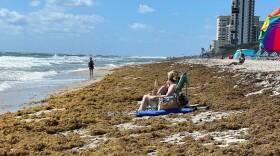 A Florida team has turned a common cause of frustration for many beach-goers into a new food opportunity, after discovering that a common processed food ingredient can be extracted from the sargassum seaweed that at times plagues our beaches.
 -
 Massive piles of sargassum, the size of which have not been seen before, are floating this way, right now, sure to coat the beaches of Florida's East Coast, the Keys, and various Caribbean islands.
 -
 You may know sargassum as the stinky algae that periodically washes ashore, but it’s been an important breeding habitat for many marine species in the Atlantic.
 -
If you've been on the coasts of Florida in the last couple of weeks, you've probably seen bunches of brown seaweed washing up on the shore.
-
 Each individual patch of sargassum may only cover a small area. This means a particular beach could see a significant amount of algae, while an adjacent beach would not.
 -
 Meteorologist Megan Borowski discusses the snowfall in the Panhandle. Then, Politco's Gary Fineout previews the Legislature's special session, and NPR’s Sarah McCammon talks about the evangelical right's influence on national policy.

© 2026 All Rights reserved WUSF
Play Live Radio
Next Up:
0:00
0:00
Available On Air Stations


