-
 The Florida Department of Education held its first listening session at Armwood High School. Some teachers brought up their concerns about missing topics, such as evolution.
 -
 Some education advocates worry the subject of climate change will be phased out of Florida's science standards during the updating process.
 -
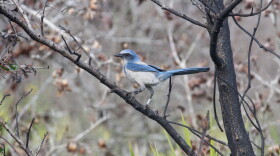 The Florida scrub jay is found only in the Sunshine State. A recent move of 48 young jays to an already established bird colony has scientists optimistic about their future.
 -
 Lily Ma, senior at Tallahassee's Chiles High School, probed the possibility of using stem cells as a vehicle to slow or even halt the degenerative process.
 -
 Gov. Ron DeSantis signed a law two years ago removing references to “climate change” from statutes. Now, a WUSF investigation shows how textbook authors were asked to do the same.
 -
 How Florida is challenging climate change in textbooks, while quietly updating its science standardsPublishers acceded to state requests watering down information on climate change’s impact, WUSF/Hechinger Report investigation finds. Now the state has turned to updating its science standards.
 -
 From mud collected in Antarctica to mangrove soil scooped up in Tampa Bay, specimens are resurfacing. But it may be a while before vital scientific equipment is restored.
 -
 The Museum of Science and Industry is now the Museum of Science and Innovation. Along with the name change, officials unveiled a new Center for STEAM Learning.
 -
 One Eckerd College student was recognized for her study on how the 2024 hurricanes impacted sand distribution in Tampa Bay.
 -
 The prototype will soon be tested at select farms within Immokalee in Collier County and Ona in Hardee County.
 -
 Scientists say it’s important to research geoengineering – large-scale attempts to cool the planet to fight climate change – in case we ever need it. But the technologies are risky. Florida will soon outlaw testing them in state airspace.
 -
 "The idea behind using sporopollenin is that now you create a permanent storage for that carbon — that carbon is not going back to the atmosphere," said Matias Kirst with UF.

© 2026 All Rights reserved WUSF
Play Live Radio
Next Up:
0:00
0:00
Available On Air Stations


