Flying taxis may sound like a fantasy from a different universe, but it's no joke.
The U.S. Department of Transportation and the Federal Aviation Administration recently announced the Advanced Air Mobility and eVTOL Integration Pilot Program.
The goal is to speed up new aircraft technology in the country — with Florida being one of the lead states for these pilot programs.
According to the DOT, Florida is involved in a "statewide effort featuring multiple industry partners will include three phases of operations focused on cargo delivery, passenger transportation, automation, and medical response, supported by significant public and private investment."
St. Petersburg has even formed its own task force to study these "taxis."
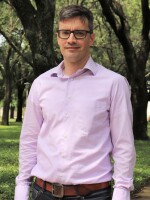
Albert Whitted Airport Manager Richard J. Lesniak leads the task force. On "Florida Matters Live & Local," he discussed what these flying taxis could mean for public transportation and more.
The interview below was edited for clarity and brevity.
What is an eVTOL?
It stands for electric vertical takeoff and landing. It's kind of a new design in aircraft that it's not new technologies, but it's pulling from technologies that are already there.
ALSO READ: Could electric air taxis be a solution to Florida's traffic jams?
It kind of takes a little bit from the drone world. Actually takes a little bit from battery-powered electric motors, kind of thing, and then it takes kind of like from just general aviation design and kind of merges them to create a new aircraft design that flies sometimes like a helicopter — sometimes like a fixed-wing aircraft.
The new or initial versions of this will be piloted, and they'll operate in airspace — no different than any other type of regular aircraft. But the longer-term version is that these become autonomous.
Why St. Pete? Why is this one of the airports you're testing these platforms?
This got on the radar of our city council.
Ultimately, the mayor and our city council decided to form a task force. The task force spent about nine months evaluating the advanced air mobility and to see how it would be integrated — what the city should prepare for.
The state of Florida through FDOT has been probably seriously looking at this, I'd say, for the last three years.
ALSO READ: Where will eVTOLs land in St. Petersburg?
So, the city put this task force together and at the end of their process, they provided a list of recommendations on how the city should prepare itself for this and utilization of the Albert Whitted Airport, which we're located, right in downtown St Pete, is being looked at as kind of the first step in that.
The advanced Air Mobility has slightly different applications for the technology, but I think the air taxi realm is what seems to capture most people's thoughts about this.
And so where this concept or use makes the most sense is going to be in your bigger metropolitan areas. The technology right now, because it's battery-powered, is somewhat limited range-wise.
So I think the thought is, initially, this is going to be like an intra-city type thing. So say, for example, you could have a route from Albert Whitted Airport to Tampa International Airport.
Are there rules about flying over water with these things?
Right now, they would have to meet the same rules as any general aviation aircraft that's flying in the airspace.
They'll operate just like a regular aircraft would. The only differences are just battery electric power, versus gas or jet fuel power.
"I don't think by the end of this year, you're going to see the sky full of air taxis. I think that's still a little further down the road."Albert Whitted Airport Manager Richard J. Lesniak
How soon are we going to see these things buzzing around the city?
That's kind of the million-dollar question. I think you alluded to the FAA's pilot program; the state of Florida was selected. Florida DOT is going to lead that effort. And they established a test facility out of what's called the SunTrax facility. It's located in Auburndale.
They actually constructed a verte port, and they have plans to add a second verte port and a runway. And I think what they're looking is to start kind of testing promotion on that site, and then kind of expanding out.
ALSO READ: Florida offers Polk County test site for flying cabs
Governor DeSantis did announce a plan to put like highways in the sky that would link different metropolitan areas.
But there's another thing on this.
None of these operators have gotten their certification by the FAA to fly yet. So I think that's going to be a big part of this as well.
I don't think by the end of this year, you're going to see the sky full of air taxis. I think that's still a little further down the road.
I should also say that I think where you'll actually see them first is going to be in the biggest metropolitan areas, so probably like New York City, Los Angeles.
Could this change transportation for the Tampa Bay area?
Absolutely. The key to it though is going to be at least looking at it in the air taxi realm.
Keep in mind, these aircraft are going to be used for multiple applications: law enforcement, search and rescue, cargo delivery, a whole bunch of things.
But in the air taxi realm, the key is going to be having an actual network, like I said, it, you know, great to have an Albert Witted Airport to Tampa International Airport, but that's kind of limited.
You want to make sure you have sites strategically placed around that make it broad enough and wide enough that people can see the accessibility of it.
And there's also the question of cost. How much is it going to cost to ride one of these things?
A lot of people have said it'll be like, maybe typical to taking an Uber Black, but I don't know if that's going to be the case.
We don't know yet, because they haven't started operating, but I suspect, like most new technologies, as it gets integrated and gets more mass acceptance, the cost will come down as it becomes more accepted.
You can listen to the full interview in the media player above. This story was compiled from an interview by Matthew Peddie for "Florida Matters Live & Local." You can listen to the full episode here.