In the humdrum of a college town, Gainesville's heart pumps to the beat of music.
What may most widely be recognized nowadays is the Tom Petty lyrics "Gonna stand my ground, and I won't back down," shouted by Gator fans decked out in orange and blue.
But just outside The Swamp is where punk rock came to thrive.
In the 90s, bands like "Less Than Jake" went from college crowds in Gainesville to the national stage.
ALSO READ: Dear Reader, USF’s first Taylor Swift course just wrapped a semester of puns and poetry
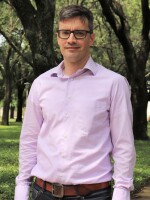
It's also where Matt Walker went from being a young adult attending the concerts to teaching a University of Florida honors class called "Gainesville Punk: A History of a City and a Scene." He even wrote a book called "Gainesville Punk: A History of Bands and Music."
"Just minutes from The Swamp stadium, the world of academia, and shiny new mixed-use developments, one of the nation's most notable punk rock scenes has thrived for decades — often out of the view of the average Gainesville resident," a 2025 course description reads. "But how does this underground movement interact, influence and help shape its surroundings?"
On "Florida Matters Live & Local," Walker chatted about how the class got started, his memories of punk concerts and more.

You moved to Gainesville in the mid-2000s. What was happening in the punk scene, and what did you know about the city's association with punk music before you arrived?
I grew up in South Georgia in the '90s. Gainesville's punk scene was pretty established and pretty rich by the 1990s, I think, so it kind of made its way up to where I was in Georgia.
I used to come down here in the late '90s to go see shows and whatnot. I decided to apply to graduate school. So I applied to UF to come live here, and that was the hope to kind of go to school for grad school at UF and to be able to kind of be closer to the music scene here, and be able to participate in it — just kind of be part of all what was going on.
I think at the time, "Against Me!" was probably one of the bigger bands that had made its way out of Gainesville. It was kind of carrying the punk rock torch through the country around those years.
Do you remember the first gig you went to in Gainesville?
The very first one I went to was one of those in the late '90s at the original Hardback Cafe, which was host to so many legendary punk shows at the time.

I came down here with some friends and saw ... I think it must have been 1997 or 1998 ... Hot Water Music, which is of course from Gainesville. Along with a band called Grade from Canada and Drag Body from Orlando. So it was a packed, sweaty show.
And then when I moved here some years later, it was pretty similar. There were shows just about every night of the week if you wanted to go out. There was always some punk or DIY bands to see just really active scene just continually through the years.
You're in a band called "Orbiter." It's not punk, but do you sort of see yourself drawing on Gainesville's punk legacy in some way with the music you're making at the moment?
All the members of the band have played in various Gainesville punk bands over the years, from "Escape Grace" to "Whiskey and Company," which is like a county band, but it's kind of a punk DIY band as well. And "Aver Q" — we all kind of come from like a punk foundation, I guess.
So, we kind of think of this band kind of operating along those lines, even though it doesn't sound like fast, aggressive punk. It's still music that kind of lives in the fringes.
Tell me about the course. You're not teaching it this year, but I believe it's going to be back next year. How did this whole thing evolve?
After the book (Gainesville Punk: A History of Bands & Music) came out, a few years ago, I was at the annual punk festival in Gainesville that brings bands from all over the place.
I was at a show at the Fest, and I saw a friend of mine, Regan Garner, and I've known her through the music scene for years. But she also works at the University of Florida as the associate director of the honors program, and they have various elective courses they can take as part of their requirements.
But we were at a show at the fest, and she asked if I might be interested in partnering with her to teach a class based on the book. And it sounded like a great idea, and we got together and talked about how to kind of base it off the book, but also add some more to it.

So the class itself uses the book as kind of the foundation, but we also have opportunities for the students to, kind of like, go out and explore Gainesville and see where the venues are. We offer extra credit if they volunteer for the fest.
So hopefully it's like a history of the Gainesville punk scene, but also an introduction to the city and kind of what Gainesville has to offer outside the boundaries of the University of Florida campus.
Are any of those venues that you went to back in the day still around or have they kind of changed over the years?
The main one that I had come down to — the Hardback Cafe — closed in the late '90s, but it actually reopened in a couple of variations in the past like 10 years in other places, but it's now closed.
But I will say where the original Hardback Cafe was located is now where the restaurant Boca Fiesta is located, which is co-owned by Warren Oakes, who played in "Against Me!" So there's still a connection to the punk scene. And they offer both hardback and softback tacos. It's kind of a flash to it as well.
You think about New York City like CBGB in East Village. Was that like the Hardback Cafe? A place where it really helped foster the development of this music.
I think so. From what I understand about CBGB, the idea behind that was just to offer a place for people to play music and express themselves — no matter what it was. And it kind of turned into like a hub for the punk scene there in New York.
I think the Hardback was similar because the original owner, Alan Bushnell, started it with the same kind of thing in mind. He just wanted to offer a place for bands to play original music and be creative. So at that time, it attracted a lot of these punk bands that weren't necessarily likely to get booked at other, maybe more polished venues and whatnot.
And he had seven days a week, you could come play. So it kind of became the go-to place.
You can listen to the full interview in the media player above. This article was compiled from an interview conducted by Matthew Peddie for "Florida Matters Live & Local." You can listen to the full episode here.