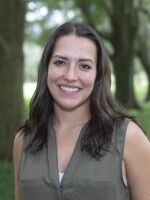
A college dropout was ordered held without bond Tuesday for on murder charges in the killings of University of South Florida students Zamil Limon and Nahida Bristy.
Hillsborough County Judge J. Logan Murphy also ordered 26-year-old Hisham Abugharbieh to have no contact with any witnesses or victims' relatives during a brief hearing in a Tampa courtroom.
ALSO READ: Affidavit reveals suspect's timeline, grisly details surrounding slayings of USF students
Abugharbieh faces two counts of first-degree murder with a weapon as well as other charges, according to court records.

Abugharbieh was not in the courtroom during Tuesday morning's hearing. Public defender Jennifer Spradley said Monday that her office would not comment.
Abugharbieh could get the death penalty if convicted.
Speaking to reporters after Tuesday's hearing, Hillsborough County State Attorney Suzy Lopez said the state will decide whether they would seek capital punishment in the coming weeks.
First, the case must go through a grand jury, which Lopez said could start as soon as May 7.
"We anticipate that the jury will return a true bill. He'll be indicted ... he'll get an arraignment date in a regular felony division, and the case will proceed from there," Lopez said.

Limon and Bristy, both 27-year-old doctoral students from Bangladesh, were considering getting married, a relative said. Both disappeared April 16. Limon was last seen at the off-campus complex where he shared an apartment with Abugharbieh and another roommate.
Detectives used cellphone locations and license plate reader data to track Abugharbieh’s car and Limon’s phone to the Howard Frankland Bridge, where Limon’s body was found Friday morning. Limon had numerous stab wounds and appeared to be bound, according to an affidavit filed by prosecutors.
Deputies continued searching for Bristy. On Sunday, the sheriff’s office announced human remains had been found in a waterway near the bridge but had not been identified. The medical examiner's office said Tuesday that autopsy reports for the body were pending.
"No evidence has been uncovered during the course of the investigation to support any probability Nahida Bristy remains alive," according to court records.

When detectives questioned Abugharbieh and the other roommate several days after the couple went missing, investigators noticed Abugharbieh's pinky finger was bandaged, but he denied any involvement with Limon’s disappearance, according to the prosecution's pretrial detention report.
When an apartment manager gave detectives access to the apartment, and to Limon's locked bedroom, the third roommate told detectives Abugharbieh had used a cart overnight on April 16 to move cardboard boxes from his room to the apartment complex's trash compactor. That's where detectives found Limon’s wallet and USF ID badge, credit card, eyeglasses and clothes that appeared to have blood on them.
Returning with a search warrant, detectives found blood residue leading from the kitchen to Abugharbieh’s bedroom, and more blood that soaked his bedroom carpet. In Limon’s bedroom, they found Bristy’s USF ID and credit cards.
Speaking after Tuesday's pretrial hearing, USF students Rifatul Islam, Salman Sadiq Shuvo and Abiral Hasib Shourav lamented the loss of their friends and classmates.
Shuvo said he will remember his friend, Zamil, as "a very shy and nice boy," with a "sweet smile and very modest." He said Nahida was "a lovely girl," who had a great singing voice.
"We are kind of a family in here," he said. "We are all affiliated to the University of South Florida."
A classmate of the deceased, electrical engineering student Rifatul Islam, said this case has shaken the Bengali student community at USF.
"It is a lot to process. See, when we come here, back from 8,000 miles away from home, they are our family, our everything here," he said. "We are shocked that the place that is our safe place, our home, our own rooms, our own kitchens, they were murdered there," he said.
Friends and family of Limon and Bristy have had discussions with the university about planning a vigil and erecting a memorial on campus.

Limon's brother has also shared on social media six requests of USF and law enforcement from the family that include the eventual return of the remains to carry out Islamic funeral rites and legal action against the off-campus student housing where the suspect was allowed to rent.
They also want the legal process to move quickly and for the "highest possible punishment" to be imposed.
Lopez said justice for the friends and families is the "common goal" of the state and local agencies working on this case.
"Starting on Friday morning, when I stood on the bridge ... everyone's been working together," Lopez said. "I spoke with detectives who hadn't slept in so long because they were so dedicated and working so hard to try and recover these victims."
Days before the couple went missing, Abugharbieh had asked OpenAI's ChatGPT what would happen if a human body was put in a garbage bag and thrown in a dumpster, according to a report filed by prosecutors over the weekend. ChatGPT responded that Abugharbieh’s question sounded dangerous, according to the report.
An investigation by the Florida attorney general's office over whether ChatGPT offered advice to the suspect accused of killing two people last year at Florida State University will be expanded to include this case, Attorney General James Uthmeier announced Monday on social media.
Open AI spokesperson Drew Pusateri said Tuesday that the company was looking into the reports on Abugharbieh and would support law enforcement in any way with the investigation.
“This is a terrible crime, and our thoughts are with everyone affected," Pusateri said in an email.
On Tuesday, the USF Bangladesh Student Association organized a GoFundMe page, with the help of Limon's graduate adviser, to support the families of the Limon and Bristy. By Tuesday afternoon, more than $30,000 has been raised.