Most people see weeds or wildflowers in their backyard as something to root out or spray pesticides on.
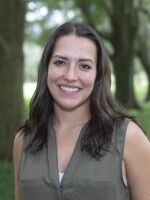
If you're Robin Greenfield, you see an afternoon snack. He's an environmental activist on a mission to forage 100% of his food for a year.
ALSO READ: Foraging food in Florida: do’s and don’ts from naturalist Roger L. Hammer
It's the latest social experiment he's taken on in a list that includes: walking 1,600 miles along the Pacific Coast, growing his own toilet paper and wearing the trash he creates for a month.
He has also made a lifelong commitment to earning less than the federal poverty line, or $15,650 annually for a single person in 2025. In the U.S., where the average household spends around $10,000 a year on food, Greenfield said foraging for his food and medicine is how he survives.
And along the way, he's touring the country to teach people how to join him.
WUSF's Gabriella Paul caught up with him during a foraging walk at Sweetwater Organic Community Farm in Tampa.
This interview transcription has been edited for clarity and length.
Just describe for me: What have you been up to?
Well, today is Day 127 without grocery stores or restaurants or even a garden. I'm foraging 100% of my food for a year. So nature is my garden, my pantry and my pharmacy.
The year officially began on Oct. 9, 2025, so today is the four-month mark, and I have another eight months to go.
What does a typical breakfast look like for you?
Well, my typical breakfast is similar to my lunch and dinner.
So, down here right now, it's wild yam, dioscorea alata. And then I'll generally eat fish. So, mullet is the main fish that I'm eating. I have my dehydrated mushrooms that I brought from Wisconsin that go in the pot; salt harvested here in Florida from the ocean; different greens, mostly different weeds that are growing around Florida; as well as some herbs; some spices; wild onion that I harvested in Gainesville and I'm fermenting; and then I'm eating a lot of fruit. So right now, my main fruit that I'm eating is citrus — so lots of grapefruits from public parks and oranges.

How many bugs have you eaten?
Oh, actually, I just ate a new bug two days ago. A stink bug for the first time!
It's unlike anything I've ever had before. It wasn't bad at all. It was so powerful my eyes started watering. It helped clear out my nose. And it was kind of like, maybe, a maraschino cherry. I like to eat the wild rice grubs. I like to eat the acorn grubs and the grub of the weevil. So, I eat a good number of bugs. I would eat more, but they're just small, and it takes a lot of time to eat bugs, so they don't take my top priority.
What are your other sources of protein then?
I eat a lot of venison, and I eat what people call road kill. The reality is that most of them that are hit, you know, aren't that damaged. So I harvest deer that are hit by cars.
I eat a lot of fish. I get a lot of protein from nuts as well, black walnuts and hickory nuts. And then also, down here in Florida, [I eat] a lot of coconuts.
I did attempt to hunt for a wild hog here in Florida — and the reason for that is there's 500,000 wild pigs here, and the reality is they do a lot of damage to the local ecosystems — but I'm a rookie hunter, and I missed my shot.

Fortunately, the fish are abundant, and I brought jars of canned car-killed deer with me that I'm able to fall back on.
I think one thing I've already learned sitting with you is that you are not waiting until you're hungry to go and forage. There's still a level of planning; it's just not going to the grocery store. Can you walk me through that?
Yeah, a lot of people imagine me just, like, crawling around and eating the greens — and sure, I do a little bit of that most days — but the idea is to live off the land through finding abundance, harvesting and storing it. It's so much more efficient, which is absolutely key to break free from the grocery store.
So, [take] apples, I'll harvest hundreds of apples at once, and then I'll make applesauce or dehydrate the apples. I'll harvest a deer. I'll harvest fish, and then I can pressure-can that. And then I carry a cooler with me as I'm traveling around, I'm mostly staying with people, so I'm also able to use people's fridge or freezer. So the reality is that most days, the vast majority of what I'm eating is food that I've harvested on previous days or even previous months.
What have people been most surprised by as they meet you along the way on your yearlong foraging challenge and tour across the U.S.?
I think some people are surprised I'm not dead. Some people are surprised that I'm physically here. You know, that I'm thriving, really. I've lost a few pounds, but you know, that's going to happen when you give up the pints of Ben & Jerry's for an entire year.
Another thing is that when people see me on social media, it's very easy to assume that I've just absolutely lost my mind. And when people come out to my talks and my plant walks, they're like, "All right, all right, I get it. He's not so crazy after all."

In the Tampa Bay region, where we have grocery costs outpacing the national average, how do you hope your foraging lessons empower people living here?
For people that are struggling, I would definitely like them to know that there is food and medicine growing right here, freely and abundantly around us — and a lot of it is the plants that they would consider weeds, that they would even consider spraying pesticides on, that they could actually eat instead.
So it's not like anyone here is going to get their entire grocery bill wiped out by foraging. But I mean, right now, you could be harvesting fresh greens every single day ... without having to spend a penny.
Once you've completed your year of foraging, is there a restaurant or a meal or something that you're craving?
I have no plans for when this is over. I'm not thinking that far ahead. However, in the moment, I'm imagining a nice, warm cookie —a hippie cookie, though, with good, nutritious ingredients, covered in like almond butter and drizzled with honey. Something like that sounds pretty good, right now.
Gabriella Paul covers the stories of people living paycheck to paycheck in the greater Tampa Bay region for WUSF. Here’s how you can share your story with her.