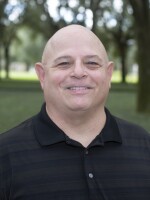
Eric Silverman has plenty to do when he works on the Goodness Gracious Great Balls of Love food truck.
He greets customers. He helps prepare orders. He serves the truck's signature ice-cream balls, made with marshmallows and a crunchy cereal coating.
There is one problem with the job.
“I don't eat ice cream,” he admits.
What he does like is the food truck.
It’s a converted short school bus, and Silverman has been fascinated by the yellow vehicles since he was a child. So when he started volunteering on the truck, it didn't take long for him to decide that one bus might not be enough.
“It's little. It's little,” Silverman said when asked what he likes about it. “I want to get one. You're going to give me one, Mom, aren't you?”
His mother, Alexandra Silverman, laughed.
“He wants me to buy him one,” she told host Matthew Peddie on "Florida Matters Live & Local. “He's always been very attracted to school buses from the time he was little, so this was just an even more perfect fit for him to be able to take part.”
Then came the practical question.
“Where will we put it is the big question.”

The bus is more than a quirky backdrop for Silverman's fascination with school buses. Goodness Gracious was developed by co-owner Emily Grace as a business that provides hands-on vocational training and inclusion for people with disabilities.
Silverman is 23 and has fragile X syndrome, a genetic condition, and lives in St. Petersburg with his mom. He was also among the first people to participate in a pilot program on Grace’s food truck.
And over several months of volunteering, Grace has watched his confidence grow.
“If I can speak a little bit about Eric's skills and kind of where I've seen a lot of growth with Eric,” Grace said, “he loves interacting with the customers and, you know, serving them their ice-cream bowls.”
“It's been great to just see his level of confidence and kind of jumping into doing the work,” she said.
That is exactly what Grace hopes the truck can provide: not an activity to keep someone occupied, but a real workplace where a young adult with a disability can learn what he is good at, figure out what kind of work he likes and gain experience that can carry into a job somewhere else.
It is an idea born from Grace's more than 12 years working in the disability field.

Not like other food trucks
Before launching Goodness Gracious Great Balls of Love and its nonprofit, Good Grace Foundation, Grace worked in disability services, launched the nationally recognized Project SEARCH employment program in Asheville, North Carolina, and served as an assistant adult services manager at Els for Autism. She has also consulted with provider agencies around the country on employment and inclusion.
Over the years, Grace said, she saw gaps in traditional service models.
So, she decided to build something of her own.
“I think that's a big part of it, is having a successful for-profit business that's really a part of community, hence the mobile piece, that is really advocating, again, for disability employment and inclusive workplaces,” Grace said.
The result is a food truck that looks unlike most.
Grace and her husband, Johnny, designed the bus-turned-business with oversized ice-cream balls on the front. The truck is designed to be accessible, but Grace also chose the vehicle because of the history attached to it.
The phrase “short bus” has long been associated with special education and, over time, became a derogatory reference to people with intellectual disabilities.

Grace wanted to turn that association around.
“We were intentional to have a converted short bus, one because it's handicap-accessible, as well as there's a long history to disability related to the short bus,” she said. “So, we really wanted to kind of take back stereotypes surrounding the short bus and make it an inclusive, fun place to learn workplace skills.”
The bus has become a conversation starter.
“I think overall a lot of positive feedback and a lot of head turns as we're driving down the highway,” Grace said. “And really it's just an invitation for a bigger conversation.”
'We are all in'
Alexandra Silverman said she and Eric had participated in school-based programs available after graduation, but she had not found many options that worked for him.
“Nothing is really a good fit for someone like Eric who needs a lot more support than what is offered through places like Vocational Rehabilitation and other agencies,” she said.
When the opportunity with Goodness Gracious came along, she said, the family embraced it.
“It's been phenomenal,” she said. “There aren't many opportunities for people like Eric. … We are all in.”
What makes the business different, she said, is that it combines personal attention with actual work.
Grace gave Silverman feedback about what he was doing well and where he could improve. At the same time, he wasn't simply practicing skills in a classroom. He was helping run a business.

“He is able to actually contribute to her business when he's volunteering, and he feels great pride in it,” his mom said.
That distinction is central to Grace's idea.
She considers herself an employer first, but her years working in disability services have given her another perspective. She knows the value of identifying not just whether someone can perform a task, but what they enjoy, where they struggle and what kind of environment might suit them.
A young adult who discovers that he likes working with customers, for example, has learned something that can help guide the next step.
Grace can give a family concrete feedback they can take to a Vocational Rehabilitation counselor or a future employer.
“With Eric, he really likes to kind of be more front-of-the-house,” Grace said. “So just having more kind of concrete understanding that then can take someone to that next step.”
A vehicle to a career
The truck is not supposed to be the last stop.
Grace describes it as a type of training wheels – a place where someone can gain experience and confidence before moving into competitive employment in the broader community.
“We're not looking to hire people with disabilities,” she said. “But really be a vehicle to competitive employment, to provide the training opportunity, maybe kind of more of the training wheels before somebody's ready to go out there and find a job in the community.”
The mobile nature of the business is part of that philosophy.
Grace wanted a business that could go into the community — to farmers markets, local businesses and other events — rather than create another setting where people with disabilities are separated from everyone else.
“It’s been kind of a life dream to have a social enterprise,” she said. “And I knew that it had to be mobile, something that could be in the community, going to farmers markets, opportunities for people to develop relationship with other community members.”

Even the unusual ice-cream balls were designed with the work in mind.
Grace initially considered a business built around loaded potatoes because the process of assembling them could be broken into steps. After experimenting with potatoes, she eventually moved toward the idea of a potato ball, then developed the ice cream ball.
The novelty of the product was part of the appeal. It could make people curious enough to approach the truck and start a conversation.
But the larger reason for choosing hospitality was the range of work it offers.
“So there are so many jobs within hospitality that it's broad enough that we're able to teach many soft and hard skills that can be transferable into the workplace,” Grace said.
Grace's hope is that the model eventually extends beyond her truck.
When she heard Silverman talk about wanting a bus of his own, she said she was excited — not because she thought it was a cute idea, but because it was exactly the kind of independence she wants the business to encourage.
“I would love to see, in other communities, ice-cream trucks, Great Balls of Love trucks, that maybe a family that has a loved one with a disability owns or a nonprofit runs,” Grace said.
For information on the Goodness Gracious food truck and foundation, click here.
This story was compiled from an interview conducted by Matthew Peddie for "Florida Matters Live & Local."