There probably aren’t a lot of people in the U.S. who know a lot about the Democratic Republic of Congo or Ebola, the deadly disease spreading through the central Africa nation.
Congo is facing the second largest Ebola outbreak in recorded history, with more than 8,000 cases as the country struggles with a shortage of health workers.The disease has spread to new health zones with 3,901 deaths reported as of Saturday. The World Health Organization has declared a public health emergency of national concern.
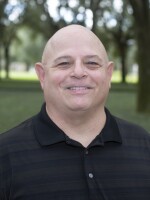
Tampa-based internist Dr. Adi Nadimpalli has spent more than a decade treating global health crises, working with Doctors Without Borders. He just returned from Congo, where he treated patients for Ebola, malaria and other diseases.
On Monday, Nadimpalli joined “Florida Matters Live & Local” and talked with host Matthew Peddie about the country, the disease and the care patients receive.
This interview transcript has been lightly edited for clarity and length.
You were recently in the DRC. What did you see when you first stepped off the plane?
I was in Butembo in Nord-Kivu province in the eastern part of Congo. Unfortunately, the outbreak is pretty widespread. It's not just in that province but in six other provinces. There's not great surveillance. yet. There wasn't when I first started. There weren’t enough treatment centers; we've built some. The WHO has built some. The Ministry of Health of the Democratic Republic of Congo is starting to build some. So, we're starting to have more treatment centers.
And next, where we need to get to, is engaging with all the community members – people out in different villages and the large cities. And we need to explain and educate on what are the signs and symptoms of Ebola, how to protect yourself and what to do if there is Ebola so that patients can get appropriate treatment and that we provide enough safety for their loved ones and they don't spread it to other community members.
There are a lot of people in in the United States who have a very vague grasp on what Ebola is. What does the virus do to the body? How is it spread? How is it treated?
Ebola is one of those diseases that people may not know, but they just feel like it's something that is super scary – and it can be. It is a virus disease. The initial spread is usually from some type of animal to a human, and then it becomes human to human. It is spread mainly through contact. It's not airborne like influenza or COVID. You have to touch somebody or be exposed to somebody's body fluids to contact that, and so that's why it's not as easy to spread as influenza or COVID or measles or some other diseases.
Once you do get it, frequently it feels like the flu. You know, you have a virus disease. You have a headache. Maybe you have some muscle pain, joint pain. You'll have fevers, maybe some cough. And for a lot of patients, that's all it is, and then it gets better. Unfortunately, it can also get worse, and it can cause problems with your liver, where it starts attacking a lot of different organs. You have significant vomiting and diarrhea, dehydration, and it can kill people. It can escalate to something quite serious.

There are 8,000 cases and about 3,800 people dying. That's a pretty high mortality rate.
Absolutely, it's close to about 50% mortality rate. But we have to take that in context. So, it's 50% mortality rate of the people that come into Ebola treatment centers or that are diagnosed positive.
Because there could be a bunch of people who say, "Ah, this may just be the flu or a cold or something, and it goes away.”
Exactly, and in that part of Africa, there is a lot of malaria, and this may feel exactly like malaria (a mosquito-borne parasitic disease). You have an insect bite, and a few days later you have fevers, muscle pain, joint pain. and so people get treatment for malaria. Maybe the virus doesn't affect them as badly. They get better and they go home.
That's kind of another story too, right? Because malaria is also a deadly disease that can really be a problem in an area.
Malaria is endemic to that area. People may get it a couple of times in their childhood and multiple times in their adulthood. And that's one of the big things that we have to work on first: differentiating Ebola versus some other disease they may have, such as malaria. So, we need better testing. But the other is: Even if there's an Ebola outbreak that can be dangerous, people are still getting malaria. People are still getting other diseases. Women are still having babies, and we need to make sure that the health system is protected so that all of those other things continue.
There was a very large outbreak of Ebola in 2014 in West Africa, in Guinea, Sierra Leone and Liberia. Studies afterward showed that more people died of non-Ebola than Ebola. And so, while we are still careful and we want to make sure that we tackle this outbreak, we also want to protect all the non-Ebola health needs that are there.
Were you involved in the response to that outbreak in 2014?
I was. Again, with Doctors Without Borders. I went to Liberia a couple of times to work there.
Had you been to DRC before this trip?
Yes, one other time. Just for a short time. I was there in 2019 for another Ebola outbreak. Unfortunately, this is the 17th outbreak of Ebola in the DRC since the 1970s, when we discovered the virus. The Congolese health authorities, doctors and nurses are very experienced with Ebola. They know how to take care of it, and it's impressive working with them to see their quality of care, their abilities and how quickly they're able to try and get things under control.
It sounds like the healthcare system is under pressure, but the nurses and doctors are doing an excellent job with the resources they have. Do you have any concerns for your own health, and what are the protocols you have to take to keep yourself safe?

As much as we want to help others, we also want to make sure that we're OK. Our organization, every organization, takes a lot of care to make sure that we are well-protected. We stay in individual rooms. We monitor our temperatures twice a day. If there's any time that we have a fever or other things – again you could get malaria. We are very aggressive about making sure and testing ourselves for everything. We have a no-touch policy.
The first time I was in Liberia was very strange in 2005, and everybody's shaking hands and hugging. It's a wonderful culture. And then in 2014, you literally don't touch anybody for weeks or months on end. And the same now, you kind of get used to it after a while, and maybe you give somebody an elbow bump or a heel bump to say hello. We really ensure that anybody who's working there is protected as much as possible.
Is there any concern that a disease like Ebola could ever pop up somewhere like Florida or elsewhere in the United States?
The chances are almost nil that the disease can come here. One, the only way it spreads is through direct contact, and even if it's direct contact, the person who has Ebola has to be symptomatic. We don't think that there's any type of asymptomatic spread, meaning that person has to have fevers and start feeling bad. We use kind of an open, transparent system. Everybody who's been in an Ebola zone, they check their temperatures. They're very cognizant of any type of symptoms. And anytime you are, you go right away to a clinic or hospital that's designated.
In 2014, when I came back from Liberia, we did a 21-day surveillance just to make sure that even if we've been in an Ebola zone that we don't have any symptoms. And I was met at (Washington, D.C.’s) Dulles Airport by a CDC official who handed me a telephone and said, "Hey, if you have any issues, we're going to keep this phone on. It's paid for over these 21 days. Any problems, and you're good.”
I should just go back to that question I asked you earlier. How do you treat it? Is it an easy treatment? Is it fairly straightforward if you can identify it soon enough?
It's a hard treatment. The current strain is called Bundibugyo. It's a relatively rare strain, so there's not been any specific treatment or vaccine. That's under research right now. We know that this causes vomiting and diarrhea and fevers and maybe some other secondary infections. So, we give fluids by IV, if needed. We make sure they are hydrated, that they're nourished. We give them antimalarials because sometimes you can't tell. We treat them for malaria. We'll give them antibiotics in case they have a secondary infection. We can check their bloodwork daily if a laboratory is available, and we still treat them with dignity. We treat them as human beings because they know Ebola is scary and there's a high mortality rate. We make sure that they understand we're with them as much as possible. We're trying to help them and their family, and sometimes if it gets toward the end, we make sure that there's appropriate palliative care.
Hopefully, there are some trials going on right now. There is a vaccine that was for a different strain that's being repurposed. Hopefully, that has some effect. There's a trial for some specific treatments for Ebola. Some of the results hopefully will be known soon. We’re trying a post-exposure prophylaxis, which means that if you've been in contact with somebody with Ebola, can you take an oral medication for some days, and that reduces or prevents you from even getting the disease? And this could be a huge thing, but also, it requires that not just the treatment, but the rest of the Ebola care, the Ebola pillars – meaning the surveillance, the contact tracing, community engagement – all these things are set up in place. And as much as our Congolese colleagues are doing a lot, this is quite overwhelming. We really need support from everybody, from the United States in this time of need.
This story was compiled from interviews conducted by Matthew Peddie for "Florida Matters Live & Local." You can listen to the full episode here.