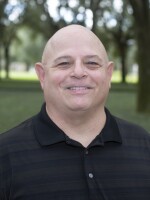
Alan Clendenin is quick to note he has only one vote. So, when it comes time for Tampa City Council to decide on stadium projects, he has drawn a mental line regarding how much public money should go to help the region’s big-league football and baseball teams.
The proposals are a $1 billion renovation of 28-year-old Raymond James Stadium and construction of a $2.3 billion Tampa Bay Rays stadium. It’s not an either-or for a city seeking growth, he notes.
“I think finding that comfortable line and where to draw it is really the challenge of elected representatives that have to make these decisions,” he said on WUSF’s “Florida Matters Live & Local.” “There is a return on the investments, and (the) number of jobs and economic return on the investment or community.”
The Tampa Bay Buccaneers recently initiated discussions on upgrading their 65,000-seat home, which is owned by Hillsborough County and operated by the Tampa Sports Authority. The face-lift is tied to the Bucs' January 2027 deadline to extend their lease, which ends in 2028, and their desire to modernize the facility to compete with newer stadiums for Super Bowls and other major events.
ALSO READ: Bucs to talk with Tampa Sports Authority about Raymond James Stadium renovations
“We have an obligation to maintain the stadium at NFL standards,” said Clendenin, who chairs the council. “So, there are upgrades and things that we are contractually obligated to do. That's when we start talking about the difference between what people want and what we need to do.”
Among the additions under consideration is an awning to protect fans from the Florida elements. That’s a want, Clendenin said, although anyone who has survived September football heat might disagree. But, in his mind, that upgrade would be on the Glazer family, which owns the team.

“There are a lot of wants, not necessarily what we have to do. Right? And the shade structure is a classic example of that,” Clendenin said. “The shade structure is for fan comfort. It's not necessarily something that the taxpayers should be obligated to pay for — in my opinion.
“Now, we do need to maintain the electricity, we need to maintain the HVAC system. There's concrete and structural issues that we need to maintain, seats we're replacing. All of those kinds of things we need to do because we're a landlord of the building.”
The Bucs’ requests are important, he said, but Ray Jay is “existing infrastructure.”
“We have a stadium,” he said.
‘Do we get a return on the investment?’
Across the street, the Rays have proposed a privately financed, $8 billion multiuse district anchored by a public-private $2.3 billion ballpark. The baseball team’s new ownership has committed more than $1.25 billion to the stadium and has a nonbinding memorandum of understanding to use nearly $1 billion combined from Tampa and Hillsborough County.
Talks on definitive agreements continue, but for now the city has agreed to contribute $180 million — $80 million from the Community Investment Tax on sales and $100 million from a neighborhood tax-increment redevelopment district.
Clendenin is a fan of the project because of the potential long-term financial payback for the city, plus a “community benefits agreement” holding the Rays to local hiring, neighborhood investing, and development of youth and educational initiatives.
ALSO READ: City council's lack of input in Rays stadium talks reflects Tampa's strong-mayor system
“The Rays’ organization is looking at spending 56% of the cost of construction of the stadium itself,” Clendenin said. “We have to make a decision. Do we get a return on the investment? If it's a public investment, if I put $1 in from the city of Tampa perspective, we're going to get somewhere around 10 to 20 times more dollars out of it than we're putting in.”
“So, we have to balance those needs with the amount of investment,” said Clendenin, alluding to previous local stadium plan that did not necessarily put the citizens first. “I think that's the key difference here: We have to look back in history 30 years ago, when Raymond James Stadium was constructed with 100% of taxpayer money.”
The Glazer family bought the Bucs in 1995 and reportedly was threatening to leave Tampa if a stadium wasn’t built. There was even a clause in the purchase agreement about moving to Orlando. Cleveland and Baltimore had lost teams to relocation and were among the cities pursuing a replacement franchise.
In 1996, Hillsborough voters barely approved the original CIT, a half-cent sales tax to fund school construction, public works and the $168 million Bucs stadium. About a year earlier, voters soundly rejected two similar measures that did not include a stadium.
Clendenin has previously surmised that many opponents of the Rays’ plan are embittered by the 1996 drama, not to mention lease terms that heavily favored the Bucs.
ALSO READ: Tampa Sports Authority rejects local attorney's claims of conflict of interest
The 30-year CIT sunsets in December, when a renewed version kicks in for 15 years. In 2024, voters approved the extension, although county commissioners moved forward with the ballot measure with the expectation it would never be used to build a stadium.
Capital expenditure is another story. Hillsborough and Tampa have maintained strong relationships with the area’s major sports franchises and invested in necessary upgrades.
Upgrades for existing facilities are budgeted
In January, commissioners upped their commitment to renovate the Tampa Bay Lightning’s Benchmark International Arena, also operated by the sports authority. The county is investing $358.5 million from tourist bed taxes, with the Lightning paying $75 million and extending their lease for six years, to 2043. The county-owned facility, which opened in 1996, annually hosts more than 150 events, including hockey games, concerts and shows.
“You look at Benchmark arena, that was a balanced approach where the Lightning organization invested quite a bit of money in it, and they just recently did some renovations where they spent hundreds of millions of dollars,” Clendenin said.
ALSO READ: Rays' stadium proposal feels pinch of state property tax vote, Bucs' renovations
In October, commissioners approved spending $18 million in tourist dollars for upgrades at county-owned Steinbrenner Field, the spring training home of the New York Yankees. Again, the lease, which ends in 2046, requires the county to keep the stadium up to date. The year before, the Yankees spent $22 million on improvements.
And in 2018, the Bucs completed a four-year, $160 million update to Ray Jay before Super Bowl LV in 2021. The most obvious additions were facing 9,600-square-foot high-definition video boards. The county, through the sports authority, contributed $29 million with the Bucs picking up the rest.
“The existing facilities have already been budgeted. We budgeted for Benchmark, obviously. We know our contractual obligations for Raymond James and Steinbrenner,” said Clendenin, who is also one of the city’s four appointees to the sports authority.
“So, there's a lot of facilities we do, and you know this is part of managing a large organization and a thriving, growing city: You have to be able to balance all the balls at once, and we anticipate the needs of all these facilities, and we budget accordingly. All the requirements that we're contractually obligated for are written into the projections and the budgets that we're looking at.”
For requests above the obligations, he plans to be “very, very, very conservative on the side of what the taxpayers should be paying for.”
ALSO READ: Tampa Sports Authority puts spending priority in writing. It's Raymond James Stadium
“(The Bucs are) going to want all the public money they could possibly get,” Clendenin said. “I'm just saying that you're only going to get what you absolutely need. Once there's something that the private folks can do on their own, it's not necessarily a public obligation. The shade structure is a great example of that. Of the $1 billion that the Buccaneers are looking for, half of that is the shade structure, so half a billion dollars. That's fan comfort for day games. It doesn't necessarily affect most of the other activation at the Raymond James Stadium.”
Again, he’s only one vote.
“I can't necessarily dictate how this is going, but is this something that I should ask the people, the taxpayers, the city of Tampa to pay for? To me, it'd be a very heavy lift.”
This story was compiled from an interview conducted by Matthew Peddie for "Florida Matters Live & Local." You can listen to the entire program here.