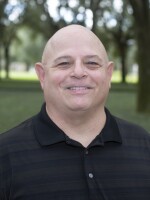
Tampa City Councilman Bill Carlson has proposed a new financing structure for the city’s investment in a Tampa Bay Rays stadium project that requires only the property taxes generated by the team’s privately funded multiuse development around the ballpark.
The new arrangement would eliminate the city’s nonbinding agreement to use $80 million from the Community Investment Tax. It also takes out the originally proposed $100 million backed by the Drew Park Community Redevelopment Area’s future property tax growth.
“That’s what's on the table. There'll be no CIT. We won't be pulling money away from other sources,” Carlson said Friday in an interview with WUSF.
Carlson has discussed most of these concepts during council meetings, but over the past couple of weeks, he has found himself in a new role.
ALSO READ: Tampa councilman Carlson says financing framework for Rays stadium is evolving
Carlson has been involved in negotiations since the council and CRA board rejected key elements of the original stadium deal two weeks ago. Rays CEO Ken Babby contacted Carlson the following day, and the team subsequently agreed to bring council members into discussions.
Carlson has long sought to include council members in the negotiations. Previously, only Mayor Jane Castor’s staff represented the city in talks.
The mayor, in an interview with WFLA radio on Friday, confirmed the change.
"We have moved from the idea of a CRA, the Drew Park CRA being involved, to the possibility of having a TIF with oversight from a CDD,” Castor said.
A TIF is a public funding method to subsidize infrastructure and community redevelopment. A CDD manages improvements for new growth.
Carlson said the Rays have been receptive to his proposals, which are based on what he calls “tax revenue sharing.”
Tax revenue sharing from TIF district
The Rays have committed to spend at least $1.2 billion on construction of the $2.3 billion stadium, planned on 122 acres in Tampa’s Drew Park neighborhood. The Hillsborough County Commission has approved a nonbinding agreement to invest $796 million.
Under Carlson’s plan, the property – currently home to Hillsborough College’s Dale Mabry campus – would be defined as a home-rule tax-increment financing (TIF) district for 35 years. Property taxes generated from multiuse development would be directed to the city, Hillsborough County and a new Community Development District, Carlson said.
A CDD is a designated government entity with the power to finance, build and maintain only public infrastructure within the district.
“I proposed a CDD because it provides another layer of public scrutiny,” Carlson told WUSF. “It's subject to public records and (Florida’s) Sunshine Law, and the CDD will only be able to spend the money on publicly owned, government-owned property. Things like stormwater, roads, sidewalks.”
Unlike the mixed-use development, the ballpark will be owned by Hillsborough County and therefore won't generate property taxes.
"From the city perspective, right now that piece of land is not generating any property taxes for the city or the county," Carlson said of the state-owned college campus. "And as they build it out, the property taxes will increase, and the city and county will participate with the project CDD on that revenue stream. But all of it, including the CDD, will only go to public investment infrastructure."
ALSO READ: What is a CRA? And why does it matter in the Rays' stadium debate?
Carlson’s pitch also requires redrawing the Drew Park CRA boundary to exclude the stadium district and the CRA would be extended from 2034 until 2064. A CRA reinvests future increases in property taxes in a blighted area.
“Drew Park will be able to control its own destiny with its own funding,” Carlson said. "And they can keep the same base year, which means that the money that's flowing in already would continue, except that we have the potential to extend it for 30 years."
Under the new agreement, the Rays have asked Tampa to provide the CDD with an $80 million advance draw, paid in four annual installments of $20 million, Carlson said. The CDD would repay the city from its share of the tax revenue generated by the stadium district. Carlson said the advance would not require the city to divert other taxes or fees.
Carlson emphasized no city money would go to the Rays or “any for-profit activities.” It would only go to infrastructure that's owned by the city, county or the state.

Creating an infrastructure trust fund
In May, the city council voted 4-3 to approve a nonbinding memorandum of understanding with the Rays that called for an $80 million investment from the CIT, a half-cent surtax voters renewed in 2024. Carlson said he would change his yes to no if the framework did not change, and he has long been considered the swing vote in the city’s participation.
County commissioners voted 5-2 to approve a nonbinding MOU that included a $796 million county contribution. However, the CRA board did not pass the proposed $100 million contribution from the Drew Park CRA.
Carlson’s argument for the new financing structure is rooted in the city’s need for infrastructure and his opposition to using existing revenue sources for the stadium project.
ALSO READ: Rays' latest renderings focus on mixed-use district surrounding planned stadium
“I’m against taking money away from needed infrastructure, and so we’re not doing that,” Carlson said.
That concern led to another part of his proposal unrelated to the Rays: creating a citywide infrastructure trust fund to cover the “billions of dollars in deferred maintenance on roads, sidewalks and stormwater.”
The fund would be partially fed by the city’s share of the tax revenue from the multiuse development in the stadium district.
More from the Downtown Tampa CRA
Additionally, Carlson said he wants to redirect roughly half of the future property taxes generated annually by the Downtown Tampa CRA. He estimates that would amount to about $20 million a year over 30 years, or more than $600 million.
Combined, he estimates the fund could generate $1.5 billion to $2 billion over 30 to 35 years without raising taxes.
“What I'm trying to do is create a win-win-win situation,” he said. “The city went from having to pay money, taking money from other sources, to now participating in a revenue stream that will fund infrastructure without raising taxes. We're not subsidizing any for-profit activities.”
The downtown CRA began in 1983, was amended in 1988 and later extended to 2043.
“CRAs are supposed to be to solve slum and blight, and there's no slum and blight in downtown anymore,” he said. “So twice I've tried to pull money out of the downtown CRA because the rest of the city is subsidizing it, and we're spending money on things that are nice to have instead of necessities.”
ALSO READ: Could the Rays build a Tampa stadium without any money from the city?
Another layer in the proposal would be extending the CRA in East Tampa for 30 years. Like the Drew Park CRA, the East Tampa area is scheduled to sunset in 2034.
City council members also sit as the Tampa CRA board, although there is an interlocal agreement with the county that governs each of the nine redevelopment areas. Any changes would also have to be approved by the county.
“The simple thing is that we’re not using any other source of funds. We’re not taking money away from anybody else,” Carlson said. “That’s the selling point to me. Without that, I wouldn’t approve it.”
Seeking public review and feedback
Carlson has asked the Rays to make a rough draft of the tax revenue-sharing agreement public before the city council considers a vote, giving residents time to review the details and offer feedback.
He said the Rays would then have an opportunity to incorporate that feedback into a final version, which should be released with more than the required seven days’ notice before any council vote.
ALSO READ: Tampa mayor rejects feud narrative with city council over Rays stadium talks
“The county has not taken a vote, but they seem to be in favor of it,” he said. “I've spoken to two or three of the county commissioners. I've spoken to administrators in the county. They seem to be very favorable to it.”
The county is also negotiating incentives with the Rays to ensure the private, multiuse portion of the project is built out, Carlson said.
The private development surrounding the ballpark remains in the planning stages, according to Castor. During her interview with WFLA, she said the Rays have not selected a developer for that portion of the project.

“As far as the particular developer, I don't believe that they've actually [decided] on a specific person or group or organization, but there has been a great deal of talk of how many square feet of development and then the actual density within that area and the elements that will make it up,” she told host Ryan Gorman.
Tampa could either reject the deal and lose the potential new revenue or use the stadium development to create a new source of infrastructure funding, Carlson said.
ALSO READ: Orlando Dreamers present new stadium renderings in pitch for Orange County tourist dollars
“If we do nothing, if the deal doesn’t go through, then we don’t get the CRAs extended, we don’t get the downtown CRA money, and we don’t get any revenue sharing from that project because it won’t exist,” said Carlson, who has announced his candidacy to run for mayor in 2027.
There are legal restrictions on what council members may discuss outside of formal meetings, so Carlson has no idea how receptive his colleagues would be to the proposals. The plan would also need approval by the mayor’s office.
“If for some reason, they come back and say, ‘We have to use CIT,’ then I vote no. If they say we can’t take half the downtown CRA, then I vote no,” he said.
The city council and county commission also must approve the final financing agreement, which is expected to fill hundreds of pages. Negotiations are ongoing on definitive documents in the deal.
Babby, the Rays' CEO, has said the team needs approval by the end of the month so site work can begin and the stadium can stay on a timeline to open by March 2029. The team's lease at Tropicana Field ends after the 2028 season.
"We won't have all the documents to finish up, you know, extending the CRAs and moving the money from the downtown CRA," Carlson said. "We just have to put the intent in there and say that it's contingent on these things being done."