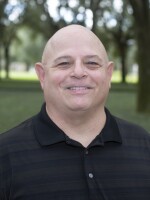
Changes are coming to the public financing plan for the proposed $2.3 billion Tampa Bay Rays stadium, according to Tampa City Council member Bill Carlson.
Carlson, in a pair of interviews on Wednesday, said he did not know specifics but indicated negotiators have adjusted how the city and Hillsborough County agreed to split up a $976 million investment outlined in a nonbinding memorandum of understanding.
“It's evolved completely since the MOU,” Carlson told podcaster J.P. Peterson.
Carlson said he only learned of the adjustment after a meeting that included CEO Ken Babby, County Administrator Bonnie Wise and an unnamed county commissioner on Tuesday.
“They were going through the model as it is now,” Carlson told WDAE’s “Pat and Aaron Show.” “As they rearrange the numbers, I think it’s going to be more equal.”
In May, Tampa and Hillsborough approved the nonbinding framework. The city’s contribution included $80 million from its portion of a special half-cent sales tax – which must go only toward infrastructure – and $100 million in future property tax revenue from a designated community redevelopment area. The county was set to cover $796 million.
Carlson likely would not have been invited to such a meeting before Friday, when Babby pledged to meet individually with council members and bring their concerns and ideas to the negotiating table.
ALSO READ: Tampa mayor rejects feud narrative with city council over Rays stadium talks
“Well, the numbers that were presented then are different than the numbers are now, and I wouldn't have known that if Friday hadn't happened because the mayor's office had not allowed us to participate,” Carlson said.
Until Babby and Carlson met for breakfast Friday, the city’s negotiating process was largely controlled by Mayor Jane Castor’s administration, which Castor said regularly briefed council members.
"The mayor will say, 'Oh, yeah, we're giving people briefings,' but briefings are one- directional. It doesn't have a to and fro," Carlson said.
In May, Tampa and Hillsborough approved the nonbinding framework. The city’s contribution included $80 million from its portion of a special half-cent sales tax – which must go only toward infrastructure – and $100 million in future property tax revenue from a designated community redevelopment area. The county was set to cover $796 million.
“The deal itself is really different than I think the (city) administration knows,” Carlson said, adding that he expects the Rays to publicly announce the revisions after discussions with council members conclude.
Carlson’s comments mark his latest response to Castor, who publicly criticized Thursday’s two votes by the city council, saying they jeopardized the project before negotiations were complete.
The first removed a vote from the Community Redevelopment Agency’s Aug. 20 meeting on the MOU, which included the $100 million from the CRA in Drew Park, where stadium would anchor an $8 billion private mixed-use development. The second rejected a routine transfer of land-use changes for the site to the state for review.
“What happened last week was that we turned down two minor things that can easily be reversed,” Carlson said.
The actions have been characterized as pushback by councilors over being left out of the negotiations, then given little time to discuss options before a vote. He said that was a problem when the administration sent the nonbinding MOU to the council in May.
ALSO READ: Rays open dialogue with Tampa City Council after stadium votes spark mayor’s backlash
“They dropped it on us at the last minute,” he said. “Then we were asked to vote yes or no without any input or any ability to talk because of the Florida Sunshine Law.”
Under the statutes, council members cannot talk to each other outside of an official meeting.
“It was the first time we had had a chance to discuss it publicly together,” he said.
That evening following the votes, Babby called Carlson and they agreed to meet over breakfast. Carlson said he paid for Babby’s meal.
“He started talking about the deal, and I said I really insist that you meet with all the city council members. And because of (the) Sunshine (Law), he can't tell me what they say, but he can have individual conversations with them, and then he can bring that back to the negotiating table, and they can represent that.”
“Jane has led this negotiation so far and all we have seen is political chaos. Don't you think the Rays should give council a chance to fix this?”https://t.co/NyxTSOeUcY
— Bill Carlson (@carlsonbill) July 26, 2026
Afterward, Babby asked for Carlson to pose for a photo together and to share it on social media to “show the public that there’s hope,” said Carlson.
“Even though we don't agree on everything, we can still have conversations, right? And the conversations may lead to something. We just need to keep it productive and positive.”
Carlson said he has heard from constituents on both sides of using public money in the stadium deal. He expects the council’s new arrangement with the Rays will bring greater transparency and lead to the best possible deal for consideration.
ALSO READ: Two city council decisions cloud Tampa's role in Rays' ballpark proposal
The Rays are in the process of setting up meetings with city council members, he said.
“I'm not allowed to know what the content of that is, but next week they will be able to put together a list of the concerns that they're hearing from city council, and then Bonnie Wise is going to update them on the concerns they're hearing from the county commissioners, and then they're going to put those into a list,” Carlson said.
“And I've asked them to make that public so it'll be transparent… And then they're also going to recommend a list of things that they're recommending changing in the deal to accommodate those requests.”
Carlson also asked the Rays to release a draft of the financing document two or three weeks later, “because it's hundreds of pages long” and “the public needs a chance to go through it” before it comes for a vote.
“The community discussions give it a much better chance of surviving,” he said. “Otherwise, if the mayor's office had dumped it on us at the last minute, it almost would have been definitely a no, because we would have had no way to edit it or negotiate it.”