International student enrollment is in the spotlight.
A report from Open Doors shows that the number of new international students coming to study in the U.S. dropped by 17% this fall.
The figure is different from total international student enrollment, which largely held steady between this and last year (1% decline). The total enrollment figure includes students who graduated, but stayed in the U.S. in the months following for temporary work.
The report captured responses from 828 of the almost 3,000 U.S. higher education institutions, and provides a first look at how recent federal policies restricting international student visas and travel could be affecting the higher education landscape.
A full picture of 2025-2026 enrollment will be available in the Open Doors 2026 report.
International enrollment at Florida universities
Statewide international student enrollment for the fall 2025 semester are not available yet, but WUSF reached out to Florida universities individually for their latest international student enrollment numbers.
The landscape shows mixed results — some campuses have seen declines in their international enrollment while others are continuing to recruit international students.
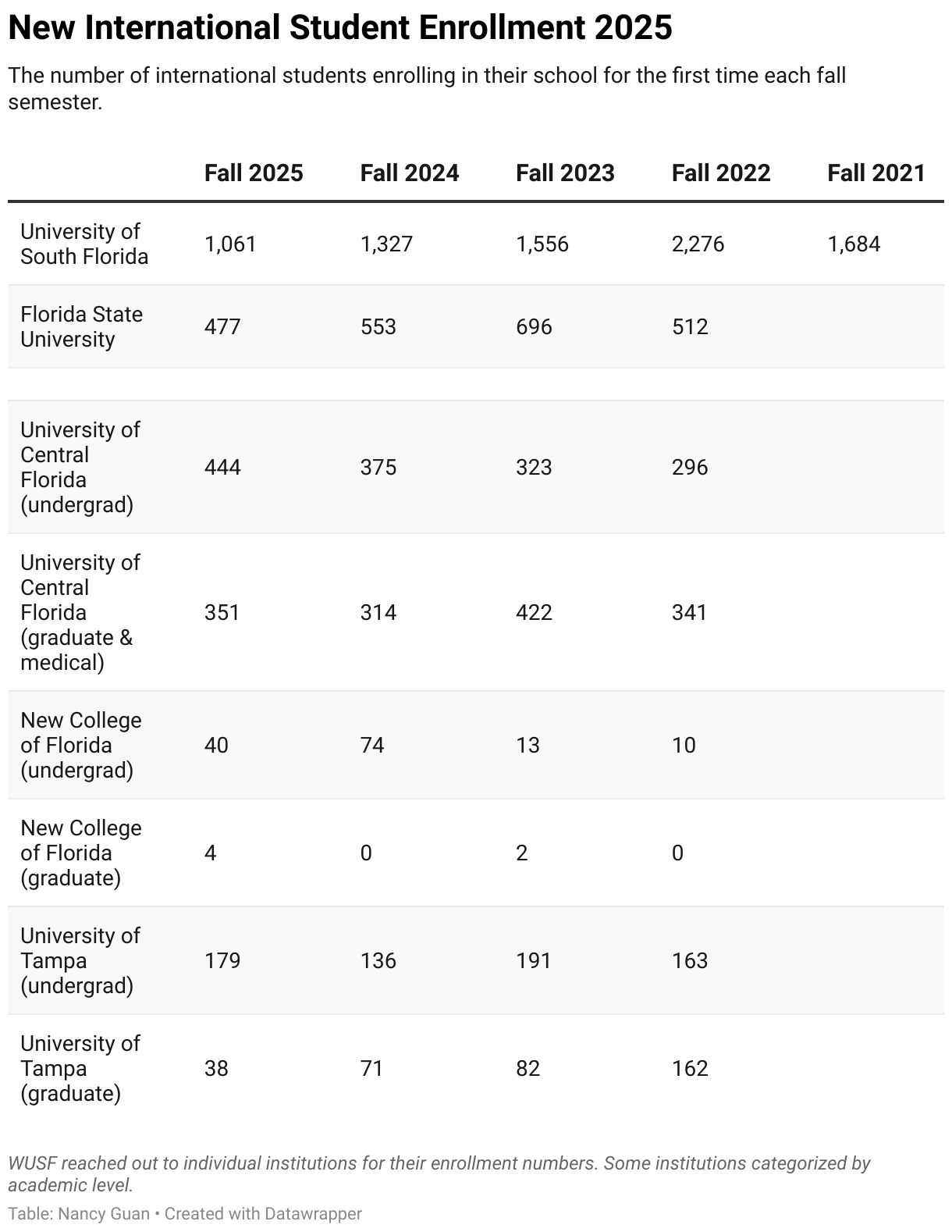
The University of South Florida, which has consistently been a top destination in the state for international students, had 266 fewer international students enroll this fall compared to the year prior.
A USF spokesperson said that most of the decline came at the master's level, while undergraduate student enrollment has been relatively stable.
The Open Doors report states that international enrollment at the graduate level was hit the hardest, partly because those students make up most of the international enrollment in the U.S. The total number of international graduate students declined by 12% across the colleges surveyed.
Florida State University saw 76 fewer students enroll in the fall.
Meanwhile, the University of Central Florida and the University of Tampa saw their international student numbers increase, though UT reported a decrease in the number of students at the graduate level.
Florida International University and the University of Florida did not provide their fall 2025 enrollment in time for publication.
Why is enrollment down, and what's to come?
There could be multiple reasons for enrollment declines.
The report states "it's important to note directly following the COVID-19 pandemic, there was a surge in pent-up demand for graduate education," which may be leveling out now.
From 2020-2021 to 2023-2024, international graduate numbers grew by nearly 175,000 students — from 329,000 to more than half a million students.
The average cost to attend Florida's public universities is the lowest in the nation, which could be a draw for some students.
However, higher education experts also point to state policies that could erode interest in Florida, such as a law restricting the state's universities from partnering with "countries of concern" and another specifically targeting ties with China, where many international students are from.
Miriam Feldblum, executive director of the Presidents' Alliance on Higher Education and Immigration, said Florida has great potential to attract international talent because of tuition affordability and economic opportunity.
But, she said, "international students are far less likely to want to come to a state or to a country in which the policies and practices are unwelcoming."
Roiling political landscape is deterring interest in U.S. schools
Although the full picture of international student enrollment is still coming into focus, this fall's drop — the steepest since the pandemic — is hard to ignore, said Feldblum.
In contrast, the decline in new international student enrollment last academic year was about 7%.
"We are seeing a dangerous escalating cascade of administrative policies and actions that are deterring international student interest in the United States," said Feldblum.
The Trump administration this year has restricted or barred travel from 19 countries, and temporarily halted student visa interviews before implementing social media vetting for foreign students hoping to study in the U.S.
The administration also abruptly terminated the records of thousands of international students, some for what lawyers say were minor disciplinary records.
Hundreds of visas were revoked from students for speaking out against Israel's war in Gaza, according to Secretary of State Marco Rubio. In some high-profile cases, ICE detained students after terminating their visas.
The federal government has since said it will restore those visas, though it's unclear how many.
"What we're doing now is actually discouraging them to stay, deterring them to come, rather than benefiting from the many contributions that international students are making, whether it's economic contributions, academic contributions or contributions to local economies," said Feldblum.
International students contributed about $43 billion to the U.S. economy during the 2024-2025 academic year, according to NAFSA: Association of International Educators.
The group estimates that the decline in international student enrollment in fall 2025 translates to $1.1 billion in lost revenue and nearly 23,000 fewer jobs.
And a proposed change to limit the number of years international students can legally stay in the U.S. for their studies is another potential barrier on the horizon.