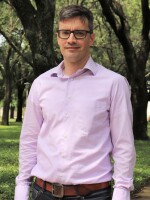
One Tampa Bay man is showing the world that no matter what's happened in your life, "purpose never dies."
Charles Price grew up in St. Petersburg and developed a "love and fascination for the glamour and hustle of the streets" at an early age, according to his website. His first arrest happened at 12, and he would eventually serve time in prison.
But he's now taken his former life of delinquency and crime to inspire younger generations and those currently incarcerated to take a different path.
He's running an organization and podcast called "Felons Ain't Failures." It has programs to help kids make positive decisions and those incarcerated or who've recently been released.
On "Florida Matters Live & Local," Coach Chuck spoke about how the organization got started, his passion for recidivism and more.
The interview below was edited for clarity and brevity.
"Our tagline is purpose never dies. No matter what you've been through, no matter where you are in life, what you have and what you don't have, purpose never dies."Charles "Coach Chuck" Price
How did Felons Ain't Failures get started?
It began when I was in prison. It was my mantra. So every day I would tell myself, "I'm a felon and not a failure. I'm a felon and not a failure."
So I kind of carried that throughout my sentence. I got out, I want to start a podcast to create a community, and I wanted to use my lived experience — the great things that I accomplished after prison even the paradigm shift that had to take place while I was in prison, to put me in a position to be able to create a plan to execute and be successful when I get out.
So it's based on lived experience and storytelling.

This is my second year with the podcast. But it was a strategic phrase. It's phase one of a bigger program of Felons Ain't Failures. So I started the podcast to create a community. From there — my goal was to launch a broadcast network for others to start a podcast.
But I created community when I got ready to launch my nonprofit, as you talked about with my youth program that's launching. I felt it important to have a community base that would be able to support and be able to share, help market and withstand in agreement with what I was doing.
So the podcast was the beginning, because storytelling is a big part of everything that we do. Culturally speaking, it was to advise. It was how educated, it was how we warned, it was how we redirected. It was how we shifted and inspired.
So I let that be the foundation and the base of everything we do. So even in our youth program, we have a young influencers podcast program in that, as well as we deal with emotional intelligence, we deal with positive behavior pathways, we also have them produce their own podcast, and in the podcast, they talk about the very things that they learn. So it gives them a voice. It establishes them as influencers and allows them to inspire those other young kids that may check out the podcast.
How did you come to where you are now?
Oh, man, it's really just the grace and the plan of God for my life. Everything about my life — everything that I'm doing is based on my lived experience.
I got arrested at 12. The age I start for my youth program is 12, so everything that I've been through led up to where I'm now.
So I use the actual experiences of my life to build everything going forward. It's authentic. It's real. It's not fake, and it's been productive and successful.
What does it feel like to have a chance to prevent what happened to you at age 12 from happening to someone else at that age?
It feels great. It's a mass responsibility. When you think of cartoons, how they had the one devil and other angels. So we're that other voice. Because in my community, a lot of kids — they have the voice of the environment, the voice of the media.
So we're that other voice that speaks in contrary to what this voice has been telling them and what they believe that they're seeing. So it's a great responsibility.
But I love it. Every time a kid comes up, "Hey, Coach Chuck. Hey, glad to see you, man. I enjoyed this. I enjoyed that. Tell me about your podcast."
It lets me know that I am impacting — that I am sowing seeds and there will be change in my community if we just keep going.
Tell me more about the young influence of felony prevention program.
We're doing it every Wednesday. It's a 10-month program. And the reason I did a 10-month program because I want to really spend some time with my facilitators, being able to really infuse the mind of our young kids.
So it's every Wednesday at Thomas Jet [Jackson Recreational] Center, which is the old Wildwood Recreation Center, from 6:30-8 p.m. We feed them from 6:30 to 7 p.m. They have class from 7 to 8 p.m. We have love and empathy, a youth therapy services that does the mental health and all of that. We have a bunch of different other people coming. We got professional readiness.
I went for ages 12 to 20, because 12 is where a lot of kids start to be influenced and follow the wrong path. And I wanted 18, 19 and 20 years old. So once they go through the program, they can turn around and be peer counselors the next year around. So they go through the program next year. They're peer counseling. They can operate and encourage the kids and help get the kids in line and everything. So it's really about creating a paradigm shift. Just let them know what you see is not what it is.
Is that something you wish you had access to?
Yes, definitely. Even if you think about the professional readiness that we do, if I had someone come to my school and do a panel and there was a fireman, there was an RN [Registered Nurse], there was a lawyer. If I had that person talk to me and I can question them, there's a possibility I may have been one of those.
My parents' focus was working — making sure we had food, eat, lights on. So in the midst I'm outside, I'm being influenced by what seems to be attractive, what seems to be easier.
And in our neighborhoods, money is king. Money is law. You learn that people get money by selling drugs, they get money by robbing things, and the quickest way to make money is to rob something and get away with it. So I felt like I could rob a store and get away with it.
How long did it take for you to change your mindset and think, "This is not the path for me. I've got to do something different?"
Oh, man, my first day in prison, my mind changed. Even going from the county jail — doing so much time in the county — going to prison, I realized like ... even in the county, you still feel home. But when they ship you off into these trees and these woods, and when I first got there, I knew I never wanted to be here again.
But I'm also a different breed of man. So it wasn't hard for me to transition mentally and hard for me to see what I would be doing afterward because I knew that I was going to fight hard to prevent people from coming here — especially kids and older men that come here — fight hard to prevent them from coming back.
We also have a recidivism program. We have a 12-week program called "The Next Me is the Best Me," and we're getting ready to go into the prison. I go to Mayo Correctional on March 18 to do a presentation on that.
You can listen to the full interview in the media player above. This article was compiled from an interview conducted by Matthew Peddie for "Florida Matters Live & Local." You can listen to the full episode here.